Before smartphones, video games and modern playgrounds became part of everyday life, children in Kerala had their own ways of enjoying their free time. Open fields, village courtyards, school grounds and temple surroundings often became places for traditional games. Many required little equipment, as children used sticks, stones, coconut leaves and other materials found around them.
These traditional games were more than simple entertainment. They encouraged physical activity, teamwork, concentration and social interaction. Some were played during everyday village life, while others were connected to Onam celebrations and local festivals.
Although many of these games are becoming less familiar to younger generations, they remain an important part of Kerala’s cultural heritage.
Traditional Games That Were Once Part of Kerala's Village Life
1. Thalappanthukali – A Traditional Ball Game
Thalappanthukali, also known as Onapanthu or Thalamapanthu, is a traditional ball game associated with Kerala, particularly its Onam celebrations. Children and adults played it, often with two teams competing against each other.
The game involves a ball, traditionally made using materials such as coconut leaves. Players throw the ball into the air and attempt to hit it according to the rules of the game. Opposing players try to catch the ball or hit the designated target to get the player out.
The game has different stages and regional variations, with rules changing between local communities. In some parts of Kerala, different names and playing methods are used.
Thalappanthukali reflects the competitive and social spirit of traditional village games, where people gathered to play and enjoy themselves during festive occasions.
2. Kuttiyum Kolum – The Traditional Stick Game
Kuttiyum Kolum is one of the well-known traditional children’s games of Kerala. It is similar to gilli-danda, a game played in different parts of India.
The game uses two wooden pieces: a longer stick called kol and a shorter piece called kutti. A small hole is made in the ground, and the shorter piece is placed across it. The player uses the longer stick to lift and strike the smaller piece into the air.
The opposing players try to catch it before it touches the ground. Depending on the local rules, points are awarded based on how far the smaller piece travels.
In different parts of Kerala, the game is known by names such as Kuttiyum Pullum and Chuttiyum Kolum. It requires coordination, timing and concentration.
Kerala Tourism notes that the game has gradually lost popularity as children have become more interested in modern sports and other forms of entertainment.
3. Kilithattukali – A Game of Speed and Strategy
Kilithattukali, also known as Thattukali, is a traditional team game that requires speed, observation and quick movement.
The playing area is drawn on the ground as a large rectangle divided into smaller sections. Players are divided into two teams, and one player takes the role of the Kili, who acts as a defender or referee.
The opposing team must move through the marked sections without being touched by the Kili or other players guarding the lines. Players who successfully cross the playing area earn their place in the game.
The game involves strategy as well as physical movement. Players must decide when to move, how to avoid the defenders and how to reach the other side safely.
Kilithattukali is also known as Uppukali in some parts of Malabar. It is a good example of how traditional games used simple ground markings to create an engaging team activity.
4. Vadamvali – The Traditional Tug of War
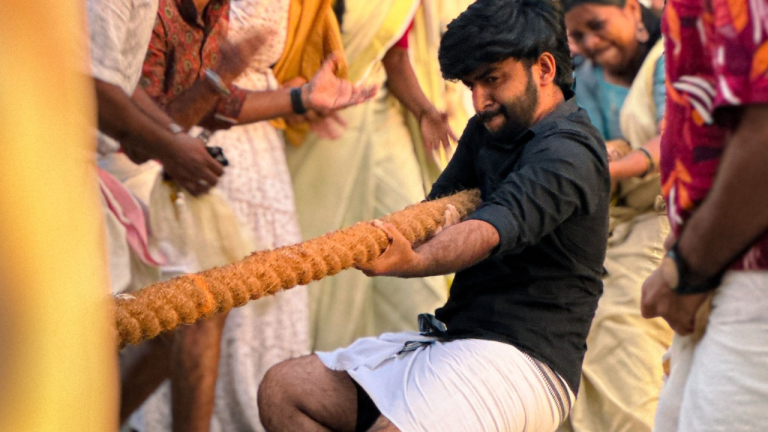
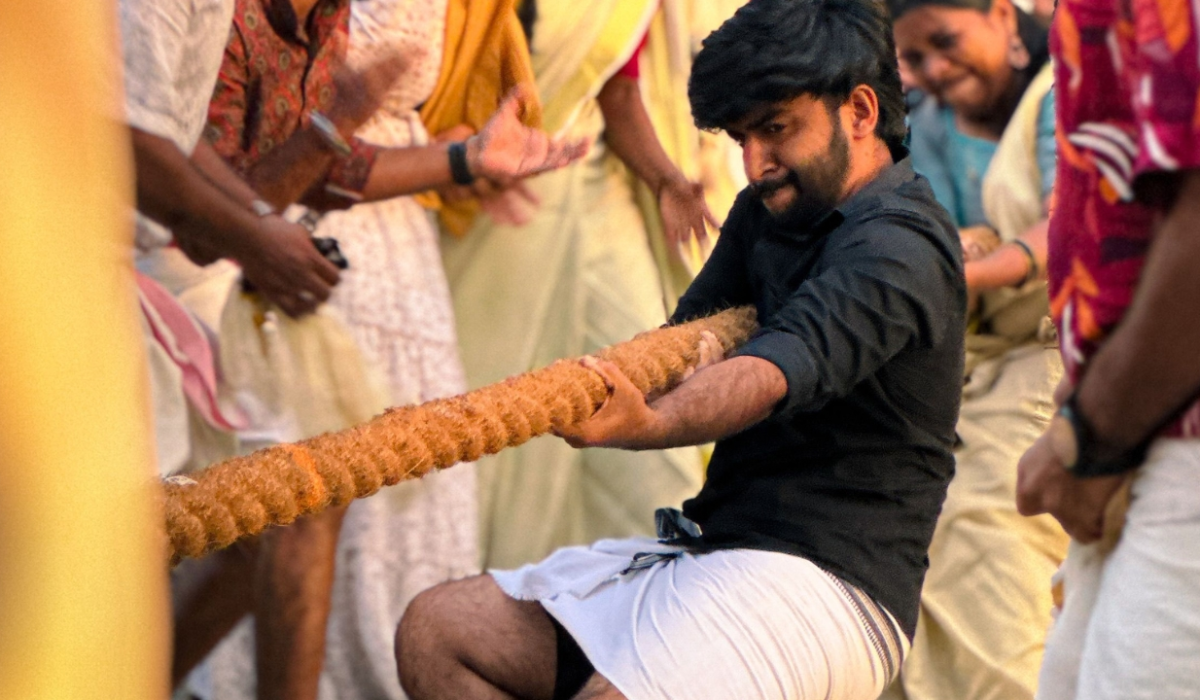
Vadamvali, commonly known as tug of war, is a popular group activity associated with Onam celebrations and other community events in Kerala.
Two teams stand at opposite ends of a strong rope and pull in opposite directions. The aim is to bring the opposing team across a designated line.
Although the rules are simple, the activity requires teamwork, coordination and physical strength. Every participant must work together to maintain balance and pull at the right moment.
Vadamvali continues to be seen during school celebrations, village gatherings and festive competitions. It is one of the traditional activities that has maintained its popularity even as many older children’s games have become less common.
5. Uriyadi – The Traditional Pot-Breaking Game
Uriyadi is a traditional festive activity in which participants attempt to break a suspended pot, usually while blindfolded or with their vision restricted.
The pot is hung at a height, and participants use a stick to try to strike it. The activity becomes challenging because they must judge its position and direction.
Uriyadi is associated with festive and religious celebrations in different parts of India, including Kerala. It is enjoyed as a public activity that attracts spectators and creates excitement during celebrations.
The game demonstrates how simple activities can become part of larger community gatherings and festival traditions.
6. Kakkukali and Valappottukali – Traditional Children’s Games
Kerala’s traditional children’s games included many smaller activities that were played in courtyards, open spaces and around village homes.
Kakkukali and Valappottukali are among the traditional folk games recorded in Kerala’s educational and cultural documentation.
Like many local children’s games, these activities were passed from one generation to another through informal learning. Children generally learned by watching others play and joining in, rather than following written instructions.
Their names and playing methods could vary between local communities. Documenting these games is important because many traditional forms of play were never formally recorded.
Why Traditional Games Were Important in Kerala
Traditional games played an important role in everyday social life. They gave children opportunities to interact, develop physical skills and learn how to participate in groups.
Many games encouraged running, jumping, throwing, balancing and quick decision-making. Others required patience, concentration and strategic thinking.
They also strengthened relationships between children and adults. Games played during festivals and village gatherings brought people together and created shared experiences across generations.
Another important feature was their simplicity. Many games required inexpensive, locally available materials rather than specialised equipment. This made them accessible to children from different backgrounds.
Conclusion
Kerala’s traditional games tell an interesting story about the state’s village life, childhood and community culture. From the competitive nature of Thalappanthukali and Kuttiyum Kolum to the teamwork involved in Vadamvali, each game represents a different form of traditional recreation.
Although modern entertainment has changed how people play, these games still deserve recognition and preservation. Introducing them to younger generations can help keep an important part of Kerala’s cultural heritage alive.