Most travellers visit Kerala for its beaches, backwaters, houseboats and hill stations. Few realise that the Arabian Sea along the Kerala coast also offers beginner-friendly scuba diving experiences. Over the past few years, professional dive centres in places like Kovalam, Varkala and Kochi have made underwater exploration more accessible and affordable for travellers.
Scuba diving in Kerala may not offer the crystal-clear visibility of the Andaman and Nicobar Islands or the coral density of the Maldives, but it provides a safe and memorable introduction to diving for beginners, non-swimmers and budget travellers.
This guide covers the best scuba diving spots in Kerala, expected costs, marine life, safety tips and practical advice for first-time divers.
Realistic Expectations for Scuba Diving in Kerala
Kerala is not a major coral reef destination. Most dive sites here feature:
- Rocky underwater formations
- Artificial reefs
- Scattered coral growth
- Reef fish and small marine ecosystems
Underwater visibility usually ranges between 5 and 12 metres, depending on weather, tides and season. While experienced divers may prefer destinations with stronger coral biodiversity, Kerala remains a practical and affordable choice for:
- Beginner divers
- Discovery scuba experiences
- Non-swimmers
- Short coastal holidays
- Budget-friendly underwater adventures
Warm water temperatures and calm seasonal conditions make the experience comfortable for most first-time participants.
Best Time for Scuba Diving in Kerala
The ideal diving season in Kerala is from October to March.
During this period:
- Sea conditions remain calmer
- Rainfall decreases
- Visibility improves
- Dive operations run more consistently
The clearest conditions are usually experienced between December and February.
Seasonal Diving Conditions
Season | Diving Suitability |
October to March | Best visibility and calm conditions |
December to February | Clearest water conditions |
April to May | Possible with occasional roughness |
June to September | Southwest monsoon; most centres closed |
The monsoon season generally brings rough seas and poor underwater visibility, so most operators suspend diving activities during this period.
Top Scuba Diving Spots in Kerala
1. Kovalam – Best for Beginners
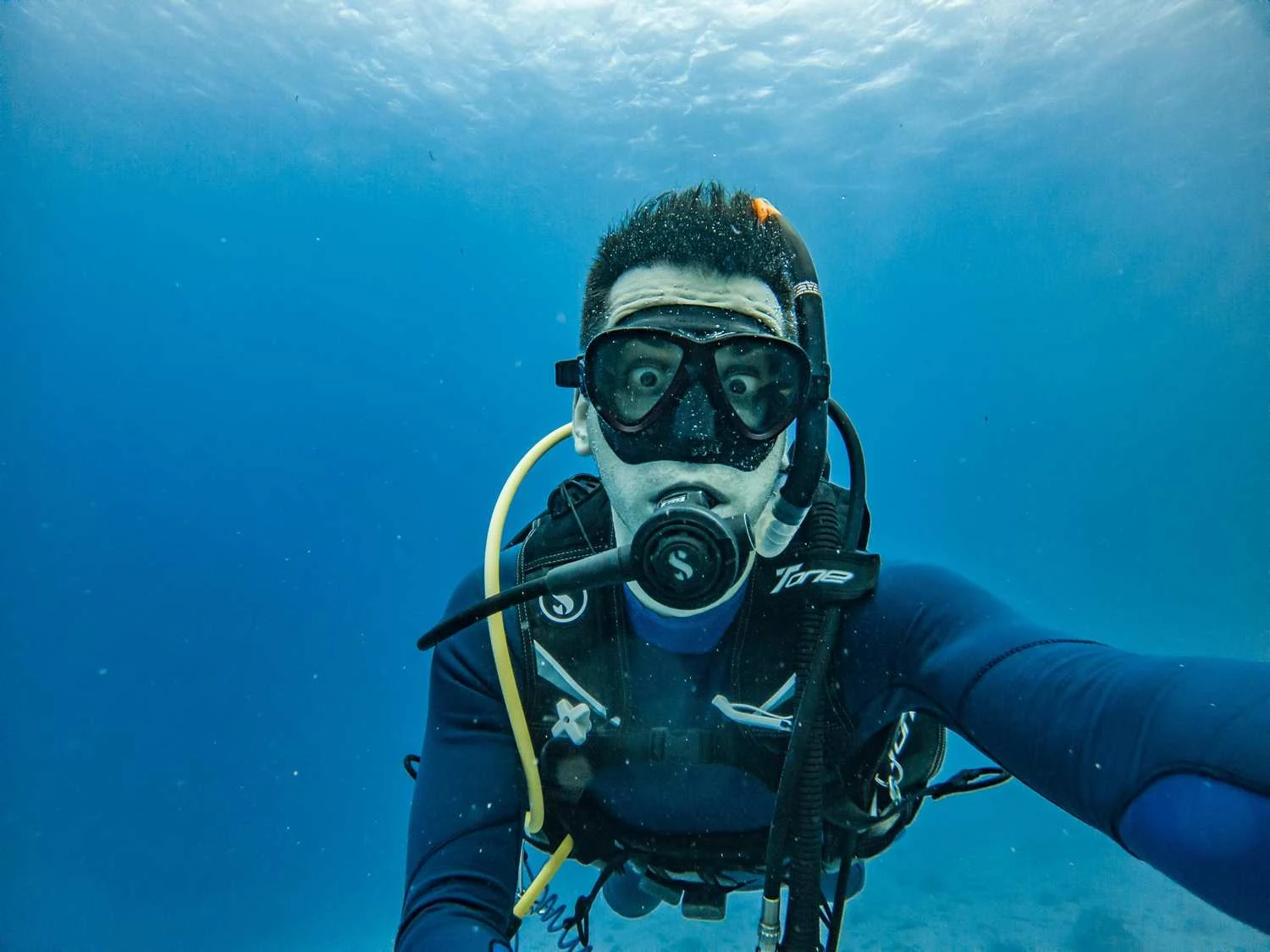
Kovalam, located near Thiruvananthapuram, is the most established scuba diving destination in Kerala.
Popular dive areas include:
- Lighthouse Beach
- Eve’s Beach
- Nearby rocky reef zones
Most beginner dives take place at depths between 6 and 12 metres under direct instructor supervision.
Marine Life Commonly Seen
- Butterflyfish
- Pufferfish
- Parrotfish
- Moray eels
- Small reef fish
Sea turtles and stingrays may occasionally appear, although sightings are never guaranteed.
Why Kovalam Is Popular
Kovalam offers relatively calm waters during the diving season, making it ideal for:
- First-time divers
- Couples
- Families
- Non-swimmers trying discovery scuba dives
During calm mornings, visibility can occasionally improve enough for divers to clearly observe rocky formations and schools of reef fish from several metres away.
2. Varkala – Scenic Cliffside Diving
Varkala offers a quieter and less crowded diving experience compared to Kovalam.
Dive locations near:
- Papanasam Beach
- Black Beach
Features rocky underwater formations and reef ecosystems suitable for both beginners and experienced divers.
Marine Life
Divers may encounter:
- Lionfish
- Surgeonfish
- Rays
- Sea anemones
- Reef fish
Water currents can occasionally be stronger than in Kovalam, so beginner dives are usually conducted in calmer areas selected by instructors.
3. Kochi – Artificial Reefs and Rocky Seabeds
Kochi offers a different underwater experience focused more on:
- Artificial reef systems
- Rocky seabeds
- Small underwater structures
Popular areas include:
- Munambam
- Cherai Beach
- Coastal regions near Fort Kochi
Visibility conditions vary depending on tides and weather, but early morning dives often provide the best experience.
Several centres in Kochi offer beginner discovery dives as well as certification programs through PADI and SSI.
4. Vizhinjam – Suitable for Experienced Divers
Vizhinjam is known for:
- Stronger currents
- Deeper waters
- Rocky marine environments
This location is generally recommended for certified or experienced divers rather than complete beginners.
Some operators also conduct limited night diving sessions depending on sea conditions and diver certification levels.
5. Beypore – Emerging Dive Location in North Kerala
Beypore near Kozhikode is gradually gaining attention among travellers interested in quieter coastal experiences.
The area features:
- Rocky underwater terrain
- Artificial structures
- Less crowded diving conditions
Diving operations here may not run year-round, so travellers should confirm availability in advance.
Marine Life in Kerala Waters
Marine sightings depend on weather, visibility and season. No operator can guarantee specific encounters.
Commonly Sighted
- Butterflyfish
- Pufferfish
- Parrotfish
- Lionfish
- Boxfish
Occasionally Sighted
- Moray eels
- Stingrays
- Sea turtles
- Octopus
Rarely Sighted
- Seahorses
- Dolphins
- Reef squid
Scuba Diving Costs in Kerala
Prices vary depending on location, operator and dive type.
Activity | Approximate Cost | Underwater Time |
Beginner discovery dive in Kochi | ₹1,500 – ₹5,000 | 30–45 minutes |
Beginner dive in Kovalam/Varkala | ₹4,500 – ₹6,000 | 20–35 minutes |
PADI Open Water certification | ₹20,000 – ₹35,000 | 3–4 days |
Advanced or night dives | ₹6,000 – ₹8,000 | Single dive |
Important Notes
- Underwater photography may cost extra
- GST may not be included in quoted prices
- Prices vary seasonally
- Always confirm inclusions before booking
Beginner Guide for First-Time Divers

Can Non-Swimmers Try Scuba Diving?
Yes. Many certified operators offer discovery scuba sessions for non-swimmers under close instructor supervision.
Participants first practise:
- Basic breathing techniques
- Hand signals
- Mask clearing
- Underwater communication
However, non-swimmers cannot obtain full scuba certification because certification programs require swimming ability.
How Long Does a Beginner Dive Take?
The full experience usually lasts 2 to 3 hours, including:
- Safety briefing
- Equipment fitting
- Shallow-water practice
- Boat transfer
- Guided underwater dive
Actual underwater time is typically between 20 and 45 minutes, depending on air consumption and sea conditions.
What Equipment Is Provided?
Most dive centres provide:
- Wetsuits
- Oxygen tanks
- Regulators
- Masks
- Fins
- Buoyancy control devices
Travellers only need to bring:
- Swimwear
- Towel
- Change of clothes
Important Safety Tips
Before participating in scuba diving activities, remember these precautions:
- Choose only certified dive operators
- Never hold your breath underwater
- Equalise your ears regularly
- Avoid diving during rough weather
- Stay hydrated before diving
- Wait 12–24 hours before flying after diving
- Inform instructors about medical conditions
People with severe asthma, heart conditions, ear infections or pregnancy should consult a doctor before diving.
Is Scuba Diving in Kerala Worth It?
For beginners and budget travellers, scuba diving in Kerala offers a safe and accessible introduction to underwater adventure.
While Kerala may not compete with dedicated diving destinations for coral density or visibility, it remains one of the easiest places in South India to try scuba diving without expensive island travel.
For many travellers, the experience of breathing underwater for the first time becomes one of the most memorable parts of their Kerala trip.
Planning Your Dive Trip in Kerala
Travellers visiting dive locations such as:
- Kovalam
- Varkala
- Kochi
- Vizhinjam
- Beypore
can easily combine scuba diving with:
- beach holidays
- Kerala backwater cruises
- hill station trips
- local sightseeing across Kerala
Reliable transport planning is important because many dive sessions begin early in the morning.
Frequently Asked Questions
Can non-swimmers try scuba diving in Kerala?
Yes. Many certified dive centres in Kerala offer beginner discovery scuba sessions for non-swimmers under direct instructor supervision. Participants first practise breathing techniques and basic underwater communication before entering deeper water.
Which is the best place for scuba diving in Kerala?
Kovalam is widely considered the best scuba diving destination in Kerala for beginners because of its calm waters and shallow dive spots. Varkala and Kochi are also popular for underwater experiences.
What is the cost of scuba diving in Kerala?
Beginner scuba diving experiences in Kerala usually cost between ₹1,500 and ₹6,000 depending on the location, dive duration and inclusions. Professional certification courses through PADI or SSI may cost ₹20,000 or more.
Is scuba diving in Kerala safe for beginners?
Yes. Scuba diving in Kerala is generally safe for beginners when conducted with certified instructors and approved equipment. Reputable dive centres provide safety briefings, shallow-water practice sessions and continuous supervision during the dive.
What is the best time for scuba diving in Kerala?
The best season for scuba diving in Kerala is from October to March, when sea conditions are calmer and underwater visibility is better. Most diving activities are suspended during the monsoon season between June and September.
What marine life can be seen while scuba diving in Kerala?
Divers in Kerala may commonly spot butterflyfish, pufferfish, parrotfish, lionfish and other reef fish. Occasionally, sea turtles, stingrays and octopus may also be seen depending on weather and visibility conditions.
How deep do beginner scuba dives go in Kerala?
Most beginner discovery scuba dives in Kerala are conducted at depths between 6 and 12 metres, depending on sea conditions and participant comfort levels. Certified instructors closely monitor divers throughout the experience.
Disclaimer
Prices, operator availability and sea conditions may change over time. Travellers should verify details directly with dive operators before booking. This guide is intended for informational purposes only and does not replace professional diving instruction or medical advice.