Have you ever driven through Kerala and passed an ancient temple without even realising it? Some are hidden among forests, while others sit quietly on hilltops or along forgotten village roads. Many of these places are over a thousand years old, yet most visitors have never heard of them.
Beyond the familiar tourist experiences, Kerala preserves another side of its history — one filled with ancient Jain temples, rock-cut caves, and stories nearly lost with time.
This guide takes you through Kerala’s hidden Jain heritage, exploring the history behind these temples, what makes each one unique, and why they deserve a place in your Kerala journey.
Quick Reference Table
Temple Name | District | Main Deity | Best For |
Sultan Bathery | Wayanad | Chandraprabha (8th Tirthankara) | Tipu Sultan history |
Kidanganad | Wayanad | Anantnatha (14th Tirthankara) | Rock‑cut architecture |
Puliyarmala | Wayanad | Dharmanatha (15th Tirthankara) | Hilltop views |
Varadoor | Wayanad | Mahavira (24th Tirthankara) | Active worship |
Jainimedu | Palakkad | Neminatha (22nd Tirthankara) | Oldest granite temple |
Mattancherry | Kochi | Mahavira | Marble & stained glass |
Alappuzha | Alappuzha | Mahavira | Gujarati merchant history |
Kallil Cave | Ernakulam | (Now Hindu – Goddess Bhagavathy) | 9th-century rock‑cut cave |
A Short History of Jainism in Kerala

Jainism came to Kerala more than a thousand years ago. Jain traders and monks traveled from North India and Karnataka. They settled in different parts of Kerala, especially in Wayanad, Palakkad, and Kochi. They built beautiful temples called basadis.
Over time, some Jain temples were abandoned. Others were changed into Hindu temples. But many still stand today, cared for by small Jain communities or by the government. These temples are now protected monuments. They tell the story of a peaceful religion that once flourished in Kerala.
Historical references may vary across local records and tourism sources.
Architecture and Spiritual Atmosphere
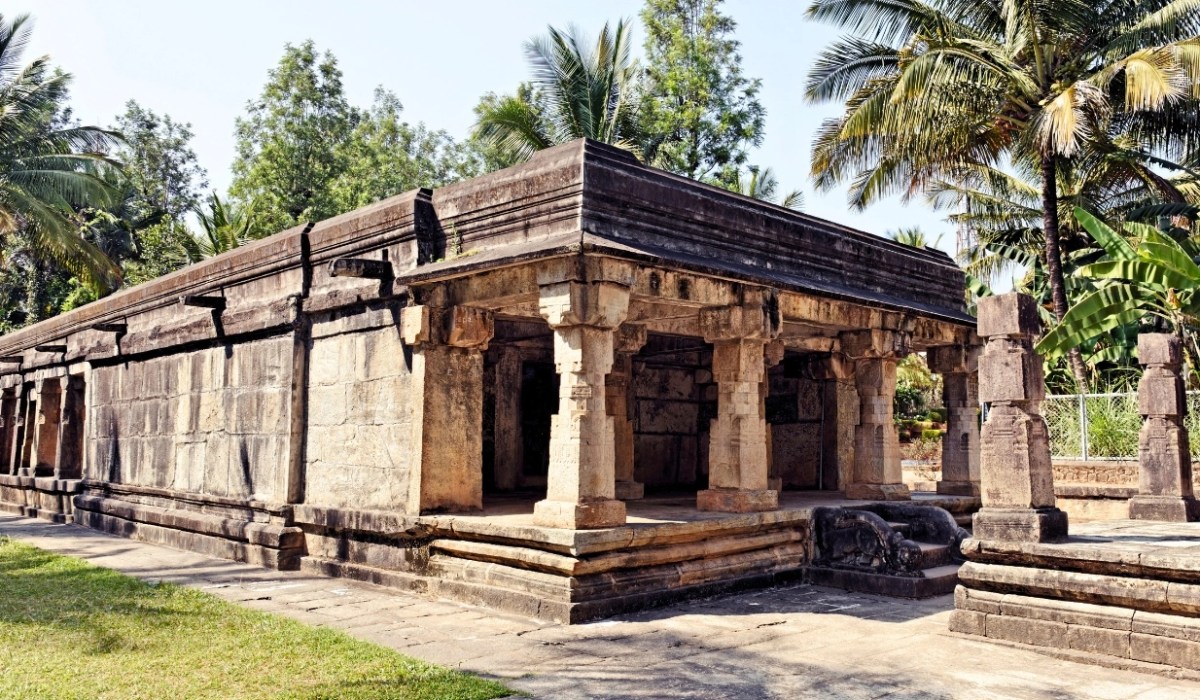
Unlike many grand South Indian temple complexes, Jain temples are often known for simplicity and calmness. Stone structures, carved pillars, and peaceful surroundings create spaces intended for worship and meditation.
Visitors often notice that these sites offer a quieter and more relaxed atmosphere compared with heavily crowded tourist locations. For those interested in architecture and history, these temples reveal another layer of Kerala’s cultural identity.
Major Jain Temples in Kerala
Below are some of the most important Jain temples in Kerala, arranged by district for easy trip planning.
1. Sultan Bathery Jain Temple – Wayanad
This is the most famous Jain temple in Kerala, located in the town of Sultan Bathery in Wayanad district. The temple was built in the 13th century and is dedicated to Chandraprabha, the eighth Tirthankara.
Why is it called Sultan Bathery?
In the 18th century, Tipu Sultan’s army used this temple as a battery (a place to store weapons and ammunition). That is why the town got the name “Sultan’s Battery,” later shortened to Sultan Bathery.
What to see:
The temple is made of granite stones with beautiful pillars and a simple, peaceful design. The site sees few crowds, allowing visitors to sit quietly and absorb the history.
Travel tips:
- Open from morning to evening
- No entry fee
- Located just 1 km from the Sultan Bathery bus stand
- Combine the visit with Edakkal Caves and Wayanad Wildlife Sanctuary
Wayanad is also home to several ancient spiritual landmarks beyond the Jain heritage. Those interested in exploring more cultural sites can read our guide to ancient Hindu temples in Wayanad.
2. Kidanganad Jain Temple (Anantnatha Swami Temple) – Wayanad
About 8 km from Sultan Bathery, the Kidanganad Jain Temple is dedicated to Anantnatha, the 14th Tirthankara. It is a protected monument under the Archaeological Survey of India (ASI).
What to see:
The temple features rock-cut architecture with simple carvings on the walls. The surrounding area is very green and calm, giving it the feel of a hidden gem.
Travel tips:
- Best visited early morning or late afternoon
- No entry fee
- Public transport is limited, so a taxi or private vehicle is recommended
3. Puliyarmala Jain Temple – Wayanad
This temple sits on a small hillock near Puliyarmala, about 6 km from Kalpetta. It is dedicated to Dharmanatha, the 15th Tirthankara.
What to see:
The temple is small but beautiful. From the hilltop, visitors can see the green valleys of Wayanad. The granite pillars are simple yet elegant, and the spot is very peaceful.
Travel tips:
- Signboards are not very clear – asking locals for directions is helpful
- Wear comfortable shoes for the short climb
- Combine with a visit to Pookode Lake and Lakkidi Viewpoint
4. Varadoor Jain Temple – Wayanad
Varadoor is a small village near Sultan Bathery. Here, a Jain temple dedicated to Mahavira, the 24th and last Tirthankara, remains active with regular worship by local Jain families.
What to see:
The temple is simple and clean. Visitors can observe daily prayer rituals. The atmosphere is warm and welcoming.
Travel tips:
- Ask permission before taking photographs inside
- Visit during morning prayer time for a special experience
5. Jainimedu Temple – Palakkad
Moving from Wayanad to Palakkad district, the Jainimedu area contains one of the oldest Jain temples in Kerala. Built in the 15th century, it is dedicated to Neminatha, the 22nd Tirthankara.
What to see:
The temple is made entirely of granite, with stones placed together without any mortar. The main deity is beautifully carved, and the temple courtyard is open and airy.
Interesting fact:
The famous Malayalam poet Vallathol wrote his epic poem Magdalana Mariyam while staying near this temple.
Travel tips:
- Located about 3 km from Palakkad town center
- Auto rickshaws and taxis are easily available
- No entry fee – photography may be restricted inside
6. Mattancherry Jain Temple – Kochi
Kochi has a small but beautiful Jain temple in Mattancherry, near the famous Jew Town. Gujarati Jain traders who settled in Kochi for business built this temple.
What to see:
Unlike the granite temples of Wayanad, this temple is made of marble. It features stained-glass windows, mirrorwork, and colourful paintings. The main deity is Mahavira, and the style reflects North Indian influence.
Travel tips:
- Very easy to reach in the middle of Mattancherry
- Combine with visits to the Jewish Synagogue, Dutch Palace, and spice markets
- The temple may close for lunch hours (around 1 PM to 3 PM) – check locally before visiting
7. Alappuzha Jain Temple – Alappuzha (Alleppey)
In the backwater town of Alappuzha, on a street called Gujarati Street, a Jain temple built by the local Gujarati merchant community is dedicated to Mahavira.
What to see:
This temple is more modern than the ancient ones but remains beautiful and well-maintained. The marble idol is impressive, and the temple is active and clean.
Travel tips:
- Very easy to find – ask for Gujarati Street near Alappuzha beach
- Visit early in the morning to avoid the heat
- Combine with a backwater houseboat trip
8. Kallil Cave Temple – Ernakulam (Special Case)
This is a very unusual site. Kallil was originally a Jain cave temple built in the 9th century. Today, it is a Hindu temple dedicated to Goddess Bhagavathy, but visitors can still see Jain carvings on the cave walls.
What to see:
A large rock-cut cave with three small shrines, carved out of a single huge rock. The location is beautiful – on top of a hill surrounded by forest.
Travel tips:
- Located near Perumbavoor, about 40 km from Kochi
- A climb of about 50 steps is needed to reach the cave
- No entry fee – open all days
- Protected monument by the Archaeological Survey of India
Why You Should Explore Jain Heritage in Kerala
Kerala’s history has been shaped by many communities and traditions over centuries. Exploring Jain heritage sites offers a chance to discover a lesser-known chapter of the state’s cultural story.
Visiting Jain temples offers opportunities to:
- Discover lesser-known destinations
- Learn about Kerala’s diverse history
- Experience peaceful spiritual environments
- Explore historical architecture
- Add unique cultural experiences to your Kerala trip
These places provide meaningful moments for anyone seeking more than conventional sightseeing.
Practical Tips for Your Visit
- Best time to visit: October to March. Summers are very hot. Monsoon (June–September) makes roads muddy in Wayanad.
- Dress code: Be respectful. Cover shoulders and knees. Remove footwear before entering.
- Photography: Always ask inside the temple. Some temples allow only outside photography.
- Food: Most Jain temples do not have food stalls. Carry water and snacks.
- Language: Locals understand Malayalam, English, and Hindi in tourist areas.
Conclusion
Kerala’s Jain temples are more than ancient places of worship. They preserve stories of communities, architecture, and traditions that shaped a lesser-known part of the state’s history. Hidden among forests, villages, and historic towns, these heritage sites offer a peaceful experience far removed from crowded attractions.
From Wayanad and Palakkad to Kochi and Alappuzha, each temple reveals a unique chapter of Kerala’s cultural past. For anyone interested in history, spirituality, or offbeat experiences, exploring Kerala’s Jain heritage can offer a different perspective on the state and its rich traditions.