
Some destinations become memorable because of one landmark. Marayoor is memorable because several completely different stories exist in the same landscape.
About 40–41 km from Munnar, Marayoor lies on the eastern side of the Western Ghats, where the landscape changes from Munnar’s tea-covered slopes into drier hills, forests, farms and villages. It is famous for Kerala’s only natural sandalwood forest, ancient Muniyaras, prehistoric rock paintings, sugarcane cultivation and traditional jaggery. Nearby attractions such as Lakkam Waterfalls, Thoovanam Waterfalls and Chinnar Wildlife Sanctuary add even more to the journey.
For travellers who want to see a different side of Idukki, Marayoor is not just a stop on the Munnar–Udumalpet road. It is a destination worth exploring on its own.
What Makes Marayoor Different?
The first thing you may notice on the journey from Munnar to Marayoor is the changing scenery.
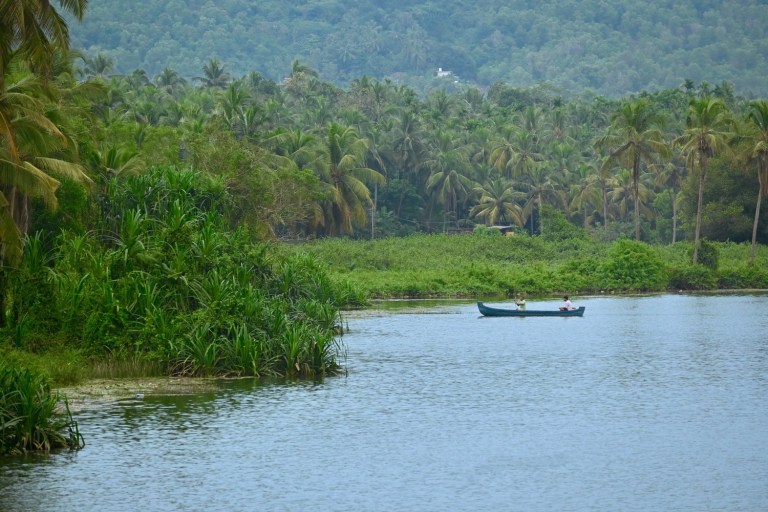
The dense greenery of the Munnar hills gradually gives way to a more open landscape of rocky slopes, forests, farmland and small settlements. The climate is also noticeably drier, creating a landscape that looks and feels different from the wetter western side of Idukki.
What makes Marayoor particularly interesting is the combination of nature, archaeology and local agriculture. A single trip can take you from sandalwood forests to ancient stone burial sites, then to sugarcane fields and traditional jaggery-making areas.
That variety is what gives Marayoor its identity.
Marayoor’s Natural Sandalwood Forest
Sandalwood is at the heart of Marayoor’s reputation.
Marayoor is known for having Kerala’s only natural sandalwood forest, making it one of the most distinctive forest landscapes in the state. The region is associated with around 65,000 sandalwood trees, although the health and density of the sandalwood landscape have changed over time.
The forest is protected, and access to its different areas is controlled. Visitors should not treat the sandalwood forest as an open trekking area.
The attraction is not simply the fragrance of sandalwood. It is the connection between the forest, the surrounding villages and the long history of sandalwood conservation in this part of Idukki.
For travellers coming from Munnar, the appearance of sandalwood-growing areas also marks a noticeable change in the character of the landscape.
Muniyara: Marayoor’s Ancient Stone Structures

Marayoor takes you much further back in time with its Muniyaras, ancient megalithic burial structures found across the region.
These stone chambers are built using large slabs, with upright stones forming the sides and a large stone placed across the top. Some have more than one chamber.
What makes Muniyara fascinating is the setting. These structures stand among the hills and countryside rather than inside a conventional museum. You can see the stones, the surrounding landscape and the mountain backdrop in the same view.
For anyone interested in archaeology, ancient cultures, or unusual historical sites, Muniyara is one of Marayoor’s highlights.
Ezhuthupara and Ancient Rock Paintings
The archaeological story continues at Ezhuthupara and other locations such as Attala, Manala and Kovilkadavu.
These sites contain ancient rock paintings made using natural pigments and provide clues about human activity in the region many centuries ago.
The experience differs from visiting a museum because the artwork remains connected to the natural rock shelters and surrounding landscape.
Some sites can be difficult to access, so it is important to follow local guidance and avoid climbing on or touching the painted surfaces.
Marayoor Jaggery and Sugarcane Fields
Marayoor has another speciality that comes directly from its agricultural landscape: sugarcane.
The valley is famous for Marayoor Jaggery, traditionally produced by extracting sugarcane juice and reducing it to make the dark, rich jaggery for which the region is known.
Marayoor Jaggery is also a registered Geographical Indication, giving this traditional local product an identity closely tied to the region.
Travellers may encounter sugarcane fields and small jaggery-making units around the villages. This is one of the simplest ways to experience Marayoor beyond sightseeing because the landscape and the local product are directly connected.
Lakkam Waterfalls on the Munnar–Marayoor Route

If you are travelling from Munnar to Marayoor, Lakkam Waterfalls is one of the easiest natural attractions to add to the journey.
The waterfall lies along the Munnar–Marayoor route and is surrounded by rocks and forest. During the wetter months, the flow becomes stronger, and the surrounding landscape turns greener.
Because it is naturally placed along the route, Lakkam can be visited as part of the journey rather than requiring a separate trip.
That makes the drive itself more interesting: tea plantations near Munnar gradually give way to forest, waterfalls and the drier Marayoor valley.
Thoovanam Waterfalls and Chinnar Wildlife Sanctuary
Travellers with more time can continue towards Chinnar Wildlife Sanctuary, where the landscape changes yet again.
Inside the sanctuary is Thoovanam Waterfalls, reached by a guided trekking route. The waterfall lies away from the main road, making it more of an outdoor experience than a quick sightseeing stop.
Chinnar is particularly interesting because of its dry forest ecosystem, which looks very different from the wetter forests found elsewhere in Kerala.
The combination of Marayoor, Chinnar and Thoovanam works well for travellers who want to spend more time exploring the eastern side of Idukki rather than returning to Munnar immediately.
The Pambar River
The Pambar River is another important part of Marayoor’s geography.
The river comes down from the higher mountain region and flows through the Marayoor–Kanthalloor landscape before continuing eastwards.
The river valley supports agriculture and settlements and adds another layer to the area’s scenery. It also helps explain why Marayoor has such a distinctive combination of forest, farmland and mountain landscapes.
During a road trip, the river and valley are easy to appreciate in the stretches between the main attractions.
Marayoor and Kanthalloor
A Marayoor trip can be extended towards Kanthalloor, another highland destination in eastern Idukki.
The two places complement each other well. Marayoor is associated with sandalwood, sugarcane and archaeological heritage, while Kanthalloor is known for its farms, orchards and cool-climate crops.
The road connecting the two is part of the attraction. Instead of one continuous tourist zone, the journey passes through farms, forests, hills and small settlements.
For travellers using a taxi or private vehicle, Marayoor and Kanthalloor can be planned as one longer mountain excursion.
Why Marayoor Is Worth Visiting
Marayoor stands out because its attractions are connected by the landscape rather than gathered around one tourist centre.
Sandalwood forests, Muniyaras, prehistoric rock paintings, sugarcane fields, Marayoor Jaggery, the Pambar River and mountain roads all form part of the same destination. Add Lakkam Waterfalls, Kanthalloor and Chinnar, and the journey becomes even more varied.
It is a place where ancient history can appear beside a working farm, where a sandalwood forest exists close to a village and where a road trip can change from tea-covered mountains to dry forest and open valley within a relatively short distance.
For travellers who have already explored the familiar side of Munnar, Marayoor offers a different experience of the Western Ghats—one shaped by forests, archaeology, agriculture and the people who have lived among these mountains for generations.