Kerala is known for its rich cultural heritage, colourful festivals, and traditional art forms. Music plays an important role in many of these traditions, especially during temple festivals, cultural celebrations, and classical performances. The sounds of traditional instruments create an atmosphere closely tied to Kerala’s history and local customs.
From the powerful rhythm of the Chenda to the distinctive sound of the Edakka, Kerala has a variety of musical instruments used in different performances. For travellers exploring the state, experiencing this traditional music can offer a deeper understanding of Kerala’s culture.
Famous Traditional Musical Instruments of Kerala
1. Chenda
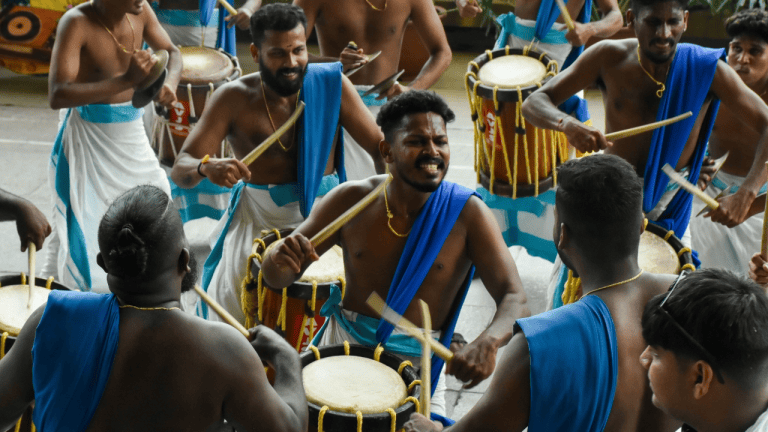
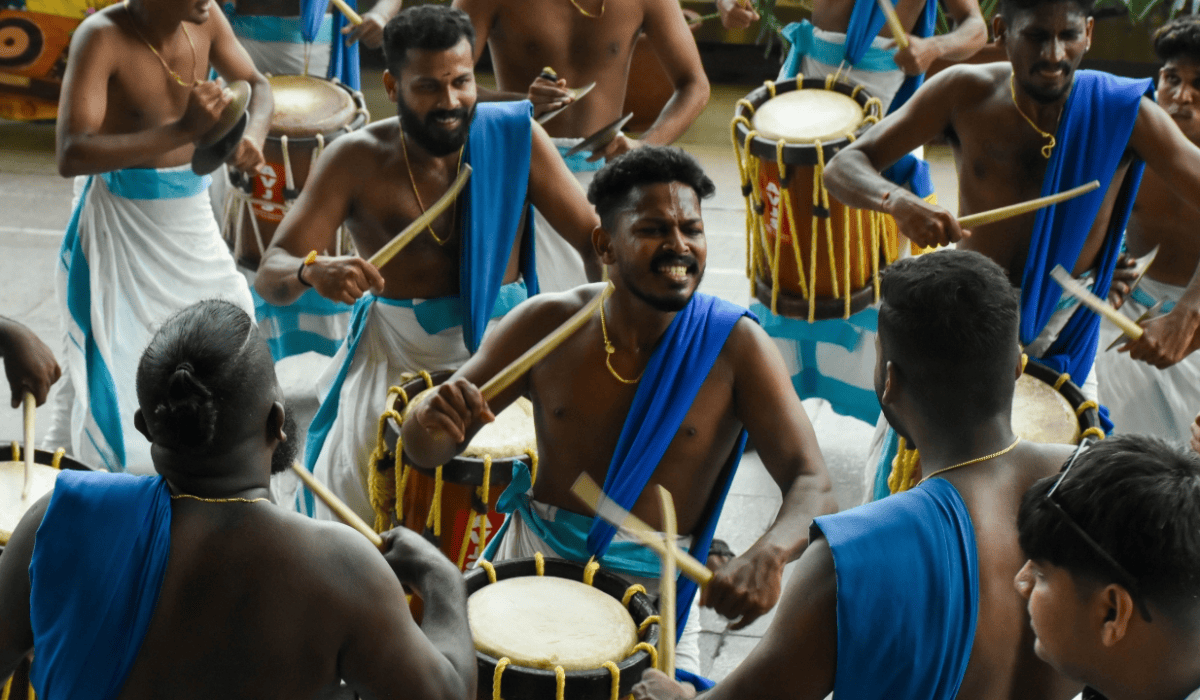
The Chenda is one of Kerala’s most recognisable traditional percussion instruments. It is a cylindrical drum played with sticks and is known for its loud, energetic sound.
Chenda is widely used in temple festivals, processions, and traditional percussion performances such as Chenda Melam. The coordinated rhythms of a group of Chenda players are an important part of many celebrations across Kerala.
For visitors, watching a live Chenda performance is a memorable way to experience the energy of Kerala’s festival culture.
2. Maddalam
The Maddalam is a traditional barrel-shaped percussion instrument associated with Kerala’s classical and temple arts. It is played with the hands and produces a deep, resonant sound.
The instrument is particularly important in Kathakali performances and is also used in traditional percussion ensembles. Its rhythms support the movement, expressions, and dramatic presentation of classical performances.
The Maddalam demonstrates how percussion in Kerala is not only about rhythm but also about supporting storytelling and performance.
3. Edakka
The Edakka, also known as Idakka, is an hourglass-shaped percussion instrument with a distinctive sound. The player uses a stick to strike one side of the drum while controlling its tension to create changes in pitch.
It is used in temple music, traditional ensembles, and certain classical performances. Unlike the powerful sound of the Chenda, the Edakka can produce more varied and expressive tones.
Its unique sound makes it an interesting instrument to listen to during a traditional musical performance.
4. Kombu
The Kombu is a curved brass wind instrument traditionally used in Kerala’s percussion ensembles. It produces strong, sustained notes that complement the rhythms of drums and other instruments.
The Kombu is often heard during traditional temple music and performances such as Panchavadyam. Its distinctive shape and powerful sound make it an important part of Kerala’s musical heritage.
Rather than carrying a melody in the same way as many conventional wind instruments, the Kombu contributes to the rhythmic structure and overall energy of an ensemble.
5. Kuzhal
The Kuzhal is a traditional wind instrument associated with Kerala’s temple music. It produces a strong, penetrating sound and is played using breath and finger movements.
It is used in traditional musical performances, including certain temple ensembles. Its sound adds a melodic element to the combination of drums and other instruments.
The Kuzhal is particularly interesting for travellers who want to discover the variety of sounds found in Kerala’s traditional music.
6. Chengila
The Chengila is a circular metal percussion instrument traditionally played by striking it with a stick. It produces a clear, ringing sound that helps maintain rhythm during performances.
It is used in several Kerala art forms and traditional musical settings, including performances associated with Kathakali and temple arts.
Although its design is relatively simple, the Chengila plays an important role in keeping time and supporting the rhythm of an ensemble.
Traditional Musical Performances in Kerala
The instruments become even more interesting when you hear them played together. Kerala has several traditional performance styles in which these instruments create distinctive rhythms and musical experiences.
Chenda Melam
Chenda Melam is a traditional percussion ensemble in which groups of musicians play the Chenda and other accompanying instruments in coordinated patterns.
These performances are especially associated with temple festivals and public celebrations. The rhythms gradually build in intensity, creating an energetic atmosphere that attracts both residents and visitors.
Panchavadyam
Panchavadyam is a traditional Kerala percussion ensemble that combines five instruments. These include the Thimila, Maddalam, Edakka, Ilathalam, and Kombu.
The performance brings together different rhythms and sounds, creating a distinctive musical experience. Panchavadyam is commonly associated with temple festivals and other traditional celebrations.
Kathakali Music
Kathakali is one of Kerala’s best-known classical performance traditions. It combines elaborate costumes, facial expressions, gestures, and storytelling.
Music plays an essential role in the performance. Instruments such as the Chenda and Maddalam support the dramatic scenes, while the Chengila and Ilathalam help maintain rhythm.
Watching Kathakali provides an opportunity to experience how traditional instruments work together with dance, acting, and storytelling.
Where to Experience Traditional Music in Kerala
Kerala’s traditional music can be experienced across all 14 districts of the state. From temple festivals and religious celebrations to cultural programmes and traditional art performances, music is an important part of Kerala’s cultural life.
Traditional instruments such as the Chenda, Maddalam, Edakka, Kombu, Kuzhal, and Chengila are used in different musical performances across the state. The type of music and performance may vary according to local customs, festivals, and artistic traditions.
Whether you visit northern Kerala, central Kerala, or southern Kerala, you may find opportunities to experience traditional music during your trip.
Temple festivals are among the most popular settings for traditional musical performances. Cultural centres and scheduled performances also offer opportunities to experience Kerala’s music and performing arts.
The best time and place to attend a particular performance depend on the local event calendar. Before travelling, check festival dates and performance schedules to find events taking place during your visit.
Experiencing traditional music in Kerala is not limited to one city or district. Exploring different parts of the state can help visitors discover the variety of musical traditions that form an important part of Kerala’s cultural heritage.
Tips for Travellers
A little planning can help you enjoy Kerala’s traditional musical performances.
- Check festival dates and performance schedules before travelling.
- Arrive early at popular events to find a suitable viewing position.
- Respect local customs, especially at temples and religious celebrations.
- Ask permission before photographing performers where appropriate.
- Be prepared for loud percussion music, particularly during large ensembles.
- Arrange your return transportation in advance if you attend an evening performance.
If you are visiting multiple destinations, consider combining a cultural performance with nearby attractions to make better use of your travel time.
Conclusion
Traditional musical instruments are an important part of Kerala’s cultural heritage. The Chenda, Maddalam, Edakka, Kombu, Kuzhal, and Chengila each contribute distinctive sounds to the state’s musical traditions.
From temple festivals and percussion ensembles to Kathakali performances, these instruments connect music with celebration, storytelling, and religious customs. For travellers interested in understanding Kerala beyond its landscapes, experiencing traditional music can be a memorable addition to their journey.