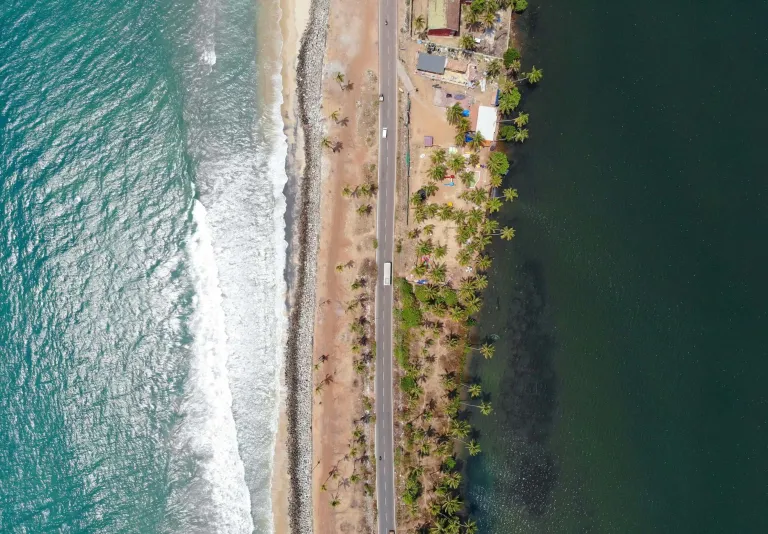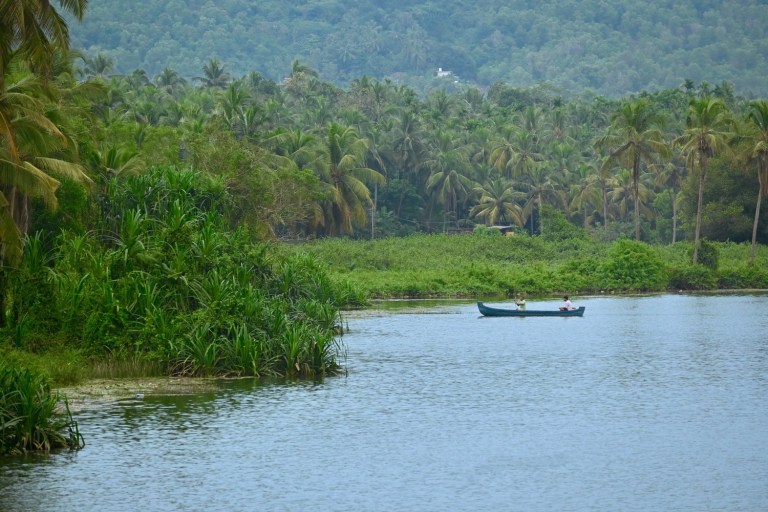

Water is at the centre of life in Enamavu. The village landscape in Thrissur is shaped by backwaters, paddy fields, coconut trees and small settlements, creating a setting where the waterways are closely connected to everyday village life.
Located around 20 km from Thrissur city, Enamavu is an interesting destination for travellers who want to explore a different side of the district. Instead of being defined by a single monument or attraction, the experience here comes from the combination of its lake, countryside, boating routes and history.
The area also has an important water-management feature, Enamavu Kettu, a bund built across the lake to prevent freshwater and saltwater from mixing. For visitors, it is more than a point on the landscape; it helps explain how water has shaped life in this village.
Where Is Enamavu?
Enamavu is located in Thrissur district, roughly 20 km from Thrissur city. The surrounding region has an extensive network of waterways, with the landscape influenced by water flowing through the Peechi, Kurumali and Puzhakkal systems.
The village sits within a countryside landscape of waterways and agricultural land. Paddy fields can be seen around the lake, while coconut palms and village homes line parts of the surrounding area.
Enamavu can also be included in a wider Thrissur backwater trip. Chettuva, Chavakkad, Guruvayur and several beaches along the Thrissur coast are within the broader region, making it possible to combine the backwaters with other local attractions.
Enamavu Lake and the Surrounding Landscape
The lake is one of the defining features of Enamavu. Water, agriculture and settlement come together around it, giving the area a distinctly rural character.
The landscape changes with the season. During periods of strong greenery, the paddy fields and vegetation add colour to the surroundings, while the open stretches of water provide long views across the countryside.
For photographers, the combination of water and coconut-lined shores creates plenty of natural scenes, particularly during the softer light of early morning and late afternoon.
But Enamavu is not simply a place to look at from the roadside. The waterways are an important part of understanding the area, which is why exploring them by boat offers a different perspective.
Enamavu Kettu and the Story of Freshwater
One of the most interesting features of Enamavu is Enamavu Kettu, also known as the Enamavu bund.
The bund was constructed across the lake to prevent freshwater and saltwater from mixing. It also plays a role in meeting the safe drinking-water needs of the village.
This makes Enamavu Kettu more than a scenic structure. It reflects the practical relationship between the village and its waterways. In a region where freshwater and coastal waters exist within the same wider landscape, managing the movement and quality of water is important for local communities.
For travellers, it is a small but meaningful part of the Enamavu story.
Coconut Island
Coconut Island is another feature associated with an Enamavu boating experience.
Reaching the island involves crossing the Enamavu waters, and it has traditionally been described as a place to stop, relax and spend some time surrounded by the backwater landscape. It can work well as part of a leisurely boat trip rather than as a standalone sightseeing stop.
Access arrangements can vary, so visitors should check with their boat operator before planning a visit specifically to the island.
The surrounding views are part of the attraction, with water and coconut-covered shores creating the kind of landscape that suits a slow afternoon rather than a rushed sightseeing schedule.
Paddy Fields and Village Life
The paddy fields around Enamavu add another layer to the landscape.
Here, the backwaters are not separated from village life. Agriculture, waterways, homes and roads exist close to one another, giving visitors an opportunity to see a more everyday side of rural Thrissur.
A visit is therefore less about moving quickly between attractions and more about observing the landscape. A boat passing through the water, farmers working around the fields or coconut trees lining the banks can all become part of the experience.
This connection between water and daily life is what gives Enamavu its character.
Enamavu's Colonial History

Enamavu also has a historical side that is easy to overlook when visiting for its scenery.
The area has historical references connected with foreign sailors, and colonial-era structures associated with both British and Portuguese influence remain part of its story.
The Portuguese Church of Lady Mount of Carmel is one of the landmarks associated with the area’s colonial history.
For travellers interested in combining nature with local history, this makes Enamavu more than just a backwater stop.
Enamavu and Chettuva: Connected but Different
Enamavu and Chettuva are often mentioned together when discussing the backwaters of this part of Thrissur, but they should not be treated as the same destination.
Chettuva is known for its wider backwater landscape, mangroves, islets and estuary, with waterways eventually connecting towards the Arabian Sea. The broader system includes Enamakkal and Enammavu waters, with the Canoli Canal contributing to the network.
This makes it possible to include both areas in a wider backwater itinerary, while still experiencing their individual landscapes.
Chettuva is also known for boating, mangrove scenery and its coastal character, making it a natural extension for travellers exploring the waterways around Enamavu.
Places to Visit Near Enamavu
Enamavu can easily be combined with several attractions in Thrissur’s coastal and cultural belt.
Depending on your route and available time, nearby places include:
- Chettuva Backwaters – known for mangroves, islets and boating.
- Chavakkad Beach – a coastal destination with a broad sandy shoreline.
- Guruvayur – an important pilgrimage town and one of the major destinations in the region.
- Snehatheeram Beach – a popular beach destination along the Thrissur coast.
- Vadanappally Beach – another coastal stop that can be included in a wider trip.
- Vilangan Hills – a hill destination near Thrissur offering views across the surrounding landscape.
If you are planning a larger Thrissur trip, these places can be combined with Enamavu rather than treating the backwater village as a full-day destination on its own.
Planning an Enamavu Visit
A simple itinerary can begin with the Enamavu lake and Kettu, followed by a boat ride through the surrounding waterways. If your boating arrangement includes Coconut Island, you can spend some time there before continuing your trip.
You can then extend the journey towards Chettuva or one of the nearby beaches. Travellers interested in religious and cultural attractions can continue towards Guruvayur.
Rather than trying to cover too many places in a short time, it is better to leave some time to enjoy the waterways themselves. Enamavu is a destination where the landscape is part of the experience.
Enamavu shows another side of Thrissur through its relationship with water. The lake, bund, paddy fields, village settlements, historical traces and boating routes all form parts of the same landscape. For travellers looking beyond the more familiar Kerala backwater destinations, it offers an opportunity to experience a quieter corner of Thrissur where nature and everyday village life remain closely connected.