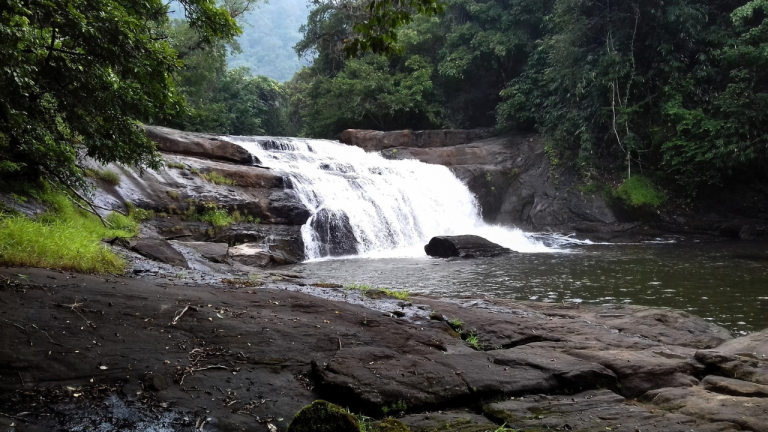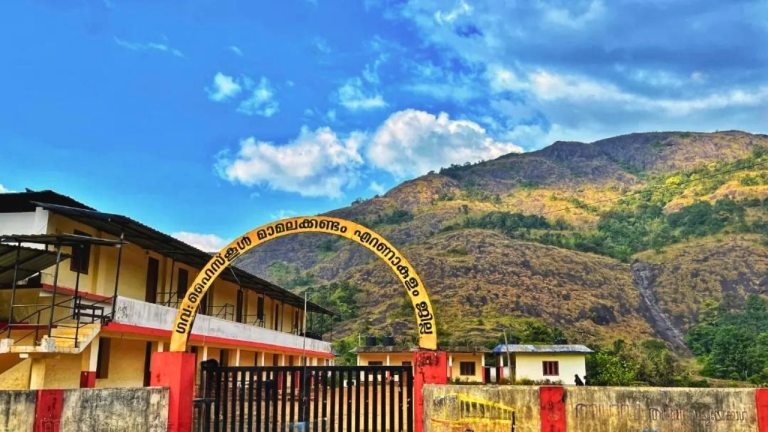

Some of Idukki’s most rewarding places are not the ones you see from the main road. Hidden among forested hills near Thodupuzha, Thommankuthu Waterfalls begins with a spectacular seven-step cascade but gradually reveals a much larger natural landscape.
The sound of rushing water leads into a world of rocky trails, forest streams and hidden corners, with Ezhunilakuthu, Nakkayam Waterfalls, Chekuthankuthu Waterfalls and forest caves adding to the adventure. What looks like a simple waterfall visit can turn into a longer journey through one of Idukki’s fascinating forest landscapes.
So, what makes Thommankuthu more than just another waterfall in Kerala—and what can you actually explore beyond its famous seven steps? Let’s take a closer look.
What Makes Thommankuthu Waterfalls Special?
The main attraction at Thommankuthu is its seven-step waterfall. Water flows over a series of rocky levels, forming cascades and natural pools surrounded by dense greenery.
But the waterfall is only one part of the destination.
The wider Thommankuthu area is known for a series of 12 waterfalls spread across approximately 5 kilometres. This makes the destination different from a typical waterfall where visitors arrive at one viewpoint, take photographs and leave.
Here, the surrounding forest, streams and trekking routes are an important part of the experience.
During the rainy season, the water flow becomes stronger, and the forest becomes particularly lush. The sound of the cascades can be heard through the surrounding woodland, creating an impressive atmosphere around the waterfall.
The Seven-Step Cascade
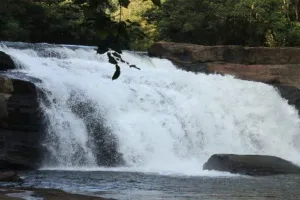
The seven-step structure is what gives Thommankuthu its distinctive appearance.
Instead of dropping from one single cliff, the water moves through several rocky stages. The changing levels create different views of the waterfall, with water flowing between large rocks and pools.
The appearance of the falls changes considerably according to rainfall.
After periods of heavy rain, the cascades can become powerful and fast-flowing. During drier periods, the water level can be lower, revealing more of the rocks along the waterfall.
For photographers, this seasonal change means that Thommankuthu can look very different depending on when the visit takes place.
Ezhunilakuthu: Another Waterfall to Explore
Ezhunilakuthu is another important waterfall associated with the Thommankuthu area.
It forms part of the wider forest-and-waterfall landscape rather than being simply another viewpoint beside the main falls. Reaching the more remote sections requires additional walking and, depending on the route, organised trekking arrangements.
For travellers who want more than a short sightseeing visit, exploring the waterfall landscape around Thommankuthu provides a chance to experience the destination at a slower pace.
The combination of flowing water, rocky terrain and forest makes this part of the journey particularly appealing to nature lovers.
Nakkayam–Thommankuthu Trek
The Nakkayam–Thommankuthu Trek is one of the most interesting experiences available around the destination.
The organised Nakkayam trail covers approximately 5 kilometres through dense and rocky forest terrain. It takes visitors beyond the more accessible waterfall area and into a landscape of streams, rocks, caves and additional waterfalls.
With the required forest permission, trekking routes can lead towards:
- Nakkayam Waterfalls
- Chekuthankuthu Waterfalls
- Nakkayam Cave
- Chekuthan Kuthu Cave
- Plapothu Cave
The wider Thommankuthu trekking experience is sometimes described as extending to around 12 kilometres, depending on the route and programme. This should not be confused with the specific 5-kilometre Nakkayam trail.
Because these are forest routes, visitors should use authorised trekking arrangements and follow the instructions of forest personnel.
Caves Around the Trekking Route
The caves add another dimension to the Thommankuthu experience.
Nakkayam Cave, Chekuthan Kuthu Cave, and Plapothu Cave are associated with the more challenging trekking terrain. These are not attractions that should be approached independently or without guidance.
For visitors taking the permitted trekking route, the caves become part of a larger forest experience involving rocks, streams and waterfalls.
This is also why Thommankuthu can appeal to adventure travellers who want something more active than a conventional waterfall visit.
Wildlife and Birdwatching at Thommankuthu
The forest surrounding Thommankuthu supports a variety of plant and animal life.
Visitors may notice butterflies, birds, and other small wildlife along the trails. The forest also provides habitat for larger animals, although sightings are never guaranteed.
A wooden watchtower in the area provides an additional point of interest for birdwatchers.
If wildlife is encountered, visitors should maintain a safe distance and avoid making noise or attempting to approach animals. Thommankuthu is a natural forest environment, so responsible behaviour is an important part of the visit.
Things to Do at Thommankuthu

A trip to Thommankuthu can be planned according to the time available.
Visit the Seven-Step Waterfall
The main waterfall is the easiest way to experience Thommankuthu. Spend time exploring the surrounding landscape and taking photographs.
Go Trekking
The forest trails provide a more active experience, particularly for travellers interested in exploring beyond the main waterfall.
Explore the Wider Waterfall Landscape
Ezhunilakuthu and other cascades make the area worth exploring beyond the main seven-step waterfall.
Try Birdwatching
The surrounding forest provides opportunities to observe birds and other wildlife.
Explore the Caves
Visitors taking authorised trekking routes can encounter caves in the Nakkayam area.
Is Swimming Safe at Thommankuthu?
Natural pools and water are part of the appeal of many waterfall destinations, but water conditions at Thommankuthu can change quickly, particularly during and after heavy rainfall.
Avoid entering fast-flowing water or approaching slippery rocks around the cascades. Even apparently shallow sections can become dangerous when the current is strong.
If local authorities or forest staff have restricted access to the water, those instructions should always be followed.
The safest approach is to enjoy the waterfall from designated and permitted areas unless current local guidance specifically allows water activities.
Places to Visit Near Thommankuthu
Thommankuthu can be combined with several other natural attractions in the broader Idukki region.
Cheeyappara Waterfalls is another popular cascade known for its roadside accessibility and scenic surroundings. Nearby Valara Waterfalls provides another opportunity to experience Idukki’s forested waterfall landscape.
For travellers interested in a more forest-oriented destination, Keezharkuthu Waterfalls, also known as Rainbow Waterfalls, is another option.
Nature lovers can extend the journey towards Thattekkad, particularly for birdwatching and exploring the forest landscape around the Thattekkad Bird Sanctuary.
The best combination depends on the starting point, available time and current road conditions.
Why Thommankuthu Is Worth Visiting
Thommankuthu Waterfalls is more than a beautiful seven-step cascade in Idukki. The real appeal lies in everything surrounding it—from Ezhunilakuthu and Nakkayam Waterfalls to Chekuthankuthu Waterfalls, forest trails, caves and winding streams.
Whether you are looking for a relaxed waterfall outing or hoping to explore deeper into the forest, Thommankuthu offers different experiences for different travellers. The main waterfall is ideal for a shorter visit, while the authorised trekking routes open the door to a more adventurous side of the destination.
For travellers exploring Thodupuzha and Idukki, Thommankuthu is a rewarding stop where waterfalls, forest and adventure come together—making it a memorable addition to a Kerala road trip.