Kerala’s coastline is home to several traditional fishing communities whose livelihoods have long depended on the sea and backwaters. Among their most familiar tools are fishing nets, designed to suit different water conditions and fishing methods.
From the large Chinese fishing nets of Fort Kochi to traditional shore-seine fishing along the southern coast, these methods reflect the practical knowledge and skills generations of fishermen have developed.
Traditional fishing nets are not just tools for catching fish. They are also part of Kerala’s coastal heritage, offering visitors an opportunity to understand the communities and working traditions behind the state’s fishing industry.
Cheenavala: The Chinese Fishing Nets of Fort Kochi
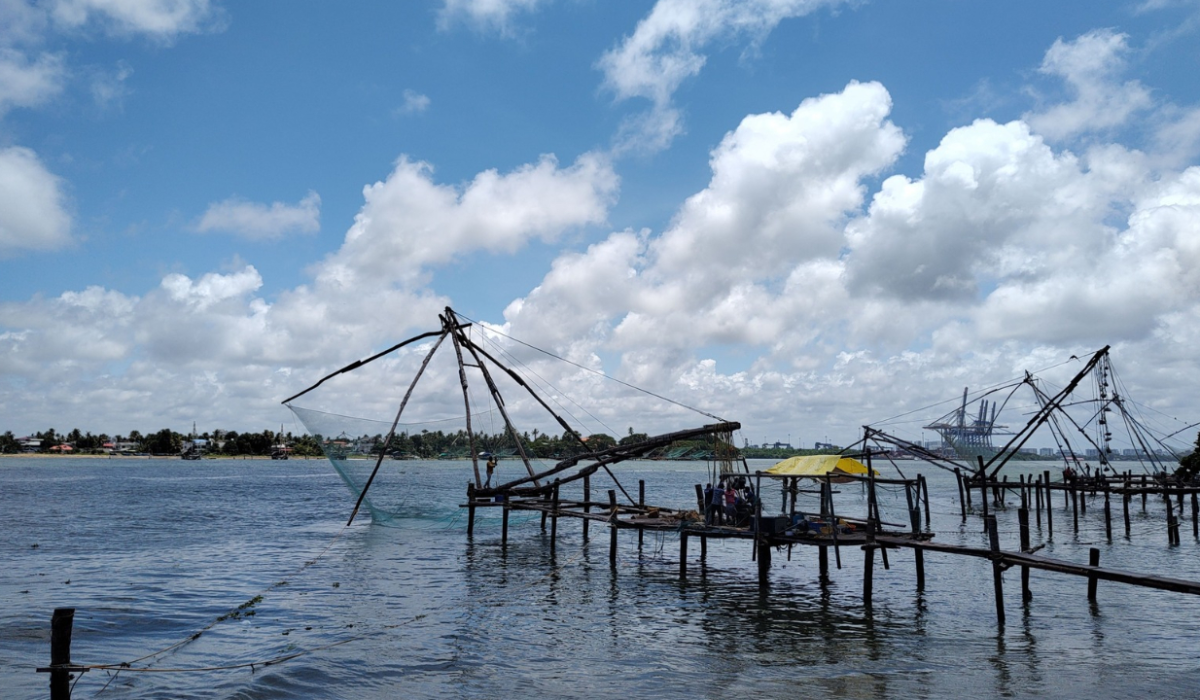
The Chinese fishing nets of Fort Kochi, locally known as Cheenavala, are among the most recognisable features of Kerala’s coastline. These large wooden structures line Fort Kochi’s waterfront and remain closely tied to the area’s fishing heritage.
Their introduction is traditionally associated with historical maritime connections between China and the Malabar Coast. Built using wooden supports, bamboo poles, ropes and counterweights, the nets work through a balancing mechanism.
A group of fishermen operates the structure together. The large square net is lowered into the water and left submerged for a short period before being raised using the counterweight system. Fish caught inside the net are then collected.
The operation requires coordination and familiarity with local water conditions. Although modern fishing methods are widely used today, these traditional structures remain an important part of Fort Kochi’s waterfront identity.
Vasco da Gama Square is one of the well-known places to view the nets. Visitors can observe the fishing structures, watch local activity and enjoy views of the Arabian Sea. Their appearance is particularly interesting during the early morning and evening hours, although active fishing is not guaranteed.
Karamadi: The Traditional Shore-Seine Fishing Method
Another traditional fishing method found along Kerala’s coast is shore-seine fishing. Locally used names and practices can vary between fishing communities, so the term Karamadi should be understood in its regional context rather than treated as a universal name for every shore-seine technique.
In this method, fishermen use a large net to surround fish in shallow coastal waters. One part of the net is brought towards the shore while the other is extended into the water, often with the help of a fishing boat. Once the net is positioned, fishermen gradually pull the hauling ropes from the beach.
The process involves collective effort, physical strength and an understanding of fish movements and coastal conditions. The net is designed with different sections that help guide and retain the catch.
Shore-seine fishing is an example of how fishing communities have adapted their methods to local coastal environments. However, its use has become less common in some places as fishing technology and working practices have changed.
Coastal Destinations Where Fishing Heritage Lives On

Kerala’s fishing traditions can be explored through its coastal villages, waterfronts and fishing settlements. Each destination offers a different view of life connected with the sea and backwaters.
Fort Kochi – A Waterfront Known for Chinese Fishing Nets
Fort Kochi is the best-known destination for seeing Kerala’s Chinese fishing nets. The waterfront combines traditional fishing structures with historic buildings, fishing boats and views across the Arabian Sea.
Vasco da Gama Square is a popular place to observe the nets and the surrounding coastal activity. Visitors can also explore the nearby streets and heritage sites to understand Fort Kochi’s wider maritime history.
Kumbalangi – Traditional Fishing Life and Backwaters
Located near Kochi, Kumbalangi is an island village surrounded by backwaters, mangroves and coconut groves. Fishing remains an important part of the local way of life.
Visitors can see traditional fishing activities and Chinese fishing nets in the surrounding waterways. The village offers a closer look at the connection between local communities and the backwater environment.
Vypin Island – Fishing Settlements Along the Coast
Vypin Island lies across the water from Fort Kochi and is known for its beaches, coastal settlements and fishing communities. Its landscape includes stretches of coastline where fishing continues to be part of everyday life.
The island provides another perspective on the coastal character of Kochi, beyond the more familiar Fort Kochi waterfront.
Kovalam – The Fishing Communities of Southern Kerala
Kovalam is widely known for its beaches, but it also has a connection with traditional coastal fishing. Local fishing communities continue to be part of the area’s identity.
The surrounding coastline offers opportunities to observe fishing boats, nets and other everyday activities, depending on local conditions. Traditional shore-seine practices have also been associated with parts of southern Kerala, although their availability and use vary between locations.
The Craft and Knowledge Behind Traditional Fishing Nets
Traditional fishing nets are designed according to the type of fish, water depth, tides and local fishing conditions. Their construction requires an understanding of mesh sizes, rope strength and the way nets behave in the water.
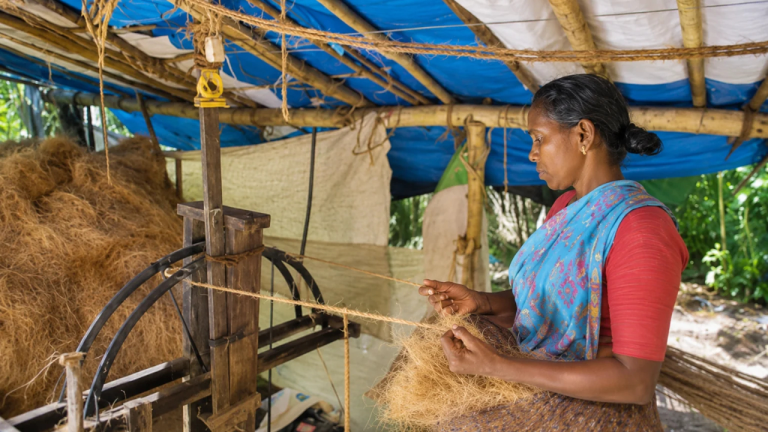
Making and maintaining fishing equipment involves practical skills developed through experience. Fishermen regularly repair damaged sections, replace worn ropes and adjust their equipment to suit different fishing requirements.
Knowledge about fishing grounds, seasonal changes and fish movements is also passed between generations. This practical understanding has helped coastal communities maintain their livelihoods in changing conditions.
Modern materials and fishing equipment have transformed the industry, but traditional methods continue to hold cultural importance. They represent the experience and working knowledge of communities whose lives are closely connected with the sea.
Conclusion
Kerala’s traditional fishing nets reveal an important part of the state’s coastal heritage. From the distinctive Chinese fishing nets of Fort Kochi to shore-seine fishing along the southern coast, these methods reflect the skills and practical knowledge of local fishing communities.
Exploring these coastal destinations gives visitors a chance to understand more than Kerala’s beaches and backwaters. It offers a closer look at the people, working traditions and fishing practices that continue to shape life along the state’s coastline.