Kerala is known for its coconut trees, and almost every part of the coconut is used in daily life. One example is the outer husk, which is processed to produce coir fibre. This natural fibre is used to make a variety of products, including ropes, mats, brushes and floor coverings.
Coir making is an important traditional industry in Kerala, particularly in Alappuzha. The process involves several stages, from soaking coconut husks to extracting, spinning and weaving the fibres. It also reflects the skills of local workers and communities who have contributed to this industry for generations.
What Is Coir and How Is It Obtained?
Coir is a natural fibre extracted from the outer husk of coconuts. It is strong, durable and resistant to moisture, making it suitable for various household, agricultural and industrial products.
Coir is commonly divided into two types:
- Brown coir: Obtained from mature coconut husks, brown coir is generally coarse and strong. It is commonly used for ropes, mats, brushes and similar products.
- White coir: Obtained from younger, green coconut husks, white coir is usually softer and finer. It suits spinning into yarn and making woven products.
The type of fibre and its final use depend on the maturity of the coconut husk and the processing method.
How Coir Is Made: The Traditional Process
Coir production involves several steps. Although modern machines are now used in many processing units, traditional methods remain an important part of Kerala’s coir-making heritage.
1. Collecting Coconut Husks
The process begins with collecting coconut husks from households, farms and coconut-processing units. After the coconut is removed, the outer husk is separated and prepared for fibre extraction.
2. Retting the Husks
Traditionally, coconut husks were soaked in the backwaters, lagoons and other water bodies of Kerala. This process is known as retting. It helps loosen the fibres inside the husk, making them easier to separate.
Traditional retting can take several months, depending on the soaking method and conditions. Once the process is complete, the husks are removed from the water and prepared for fibre extraction.
3. Extracting the Fibre
After retting, the husks are beaten to separate the fibres from the remaining material. Traditionally, workers used wooden mallets for this task. The extracted fibres are then cleaned to remove unwanted particles.
Today, mechanical defibering machines are also used to speed up the process and handle larger quantities of coconut husks.
4. Drying and Spinning
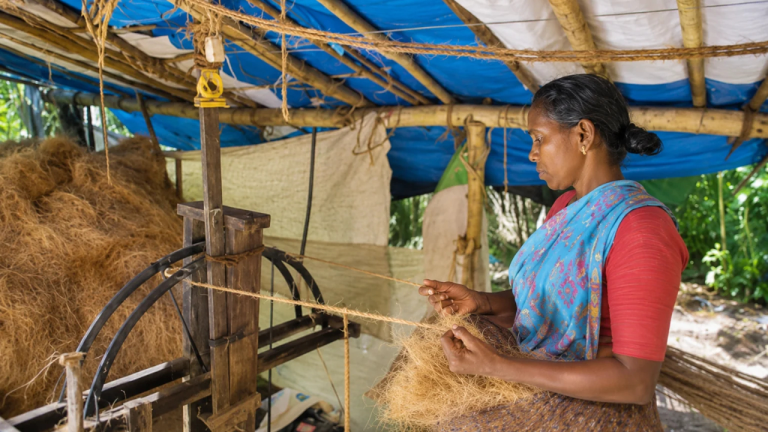
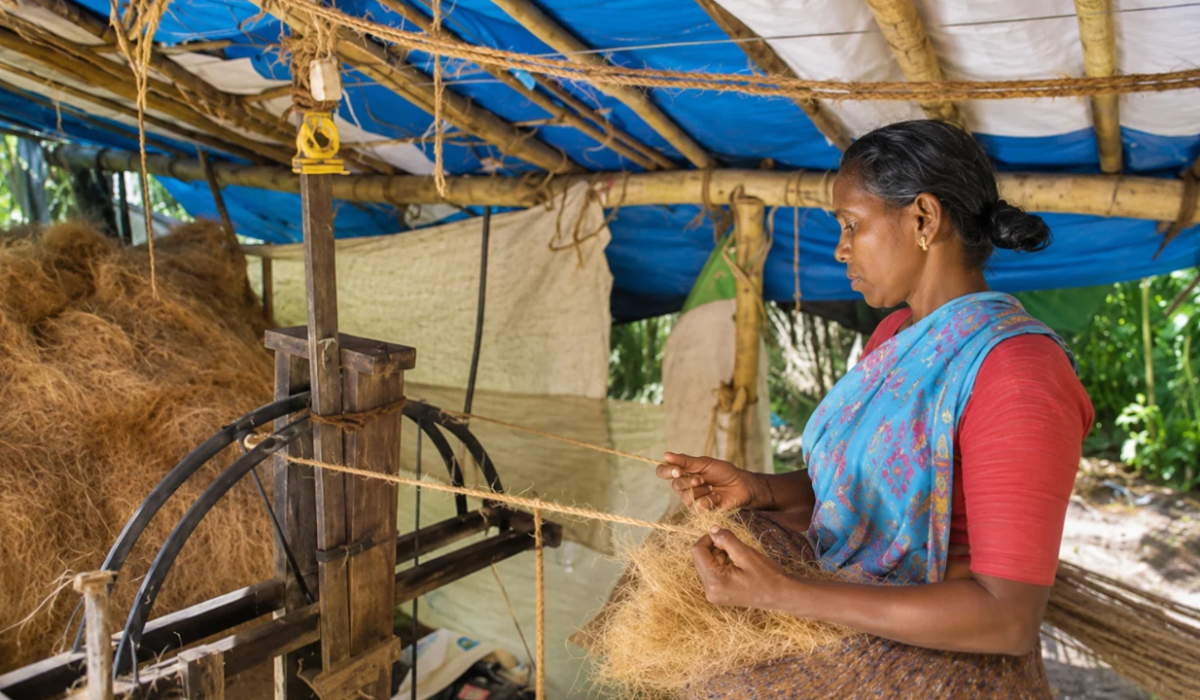
The extracted fibres are spread out and dried before being spun into yarn. In traditional coir production, workers use hand-operated spinning wheels to twist the fibres together.
The traditional spinning wheel, commonly known as a rat, is an important part of Kerala’s coir-making process. The yarn produced at this stage is used to make ropes, mats and other woven products.
5. Weaving Coir Products
The coir yarn is woven into different products using handlooms or mechanical looms. Depending on the design and purpose, the yarn can be made into floor mats, rugs, carpets and other items.
Each stage requires care and skill to produce strong and durable coir products.
Alappuzha: The Heart of Kerala's Coir Industry
Alappuzha has long been an important centre of Kerala’s coir industry. The availability of coconut husks, waterways suitable for retting, and transport facilities contributed to the growth of the industry in the region.
The backwaters and canals played an important role in traditional coir production, particularly during the retting process. Over time, coir manufacturing became an important source of livelihood for many families in the district.
The Coir Board also plays an important role in supporting and developing the industry through initiatives related to production, technology, marketing and the welfare of coir workers.
Visitors exploring Alappuzha can learn more about this traditional industry and its connection with the region’s culture and everyday life. Coir making is also part of Kerala’s wider traditional craftsmanship, reflecting the skills and knowledge found across the state’s traditional industries.
Traditional Coir Products of Kerala
Coir is used to make a wide range of products for households, agriculture and commercial purposes. Some commonly made products include:
- Coir mats: Used at home entrances, doorways and other floor areas.
- Coir ropes: Strong ropes made by twisting coir fibres together.
- Floor rugs and carpets: Woven products available in different patterns, sizes and textures.
- Coir brushes: Used for household cleaning and other practical purposes.
- Handicrafts: Decorative items, baskets and other products made using coir.
Another useful material obtained during coir processing is coir pith, also called coco peat. After suitable processing, it is used as a growing medium in gardening, nurseries and agriculture.
The People Behind the Coir Industry
Coir making is not just about processing coconut husks. It is also an industry built around the skills and work of local communities.
For generations, many families in Kerala have depended on coir production for their livelihood. Women have played an important role in activities such as fibre spinning and small-scale production, while other workers are involved in extraction, weaving and manufacturing.
Co-operative societies and industry organisations also support workers and small-scale producers through training, production facilities and marketing opportunities. These efforts help maintain local livelihoods and support the continuation of traditional coir production.
Coir Making in Modern Kerala
Coir production has changed with the introduction of modern machinery and improved processing methods. Mechanical fibre extraction, spinning machines and power looms have made it possible to produce coir products in larger quantities.
The industry has also expanded beyond traditional household products. Coir fibre and related materials are now used in gardening, landscaping, agriculture and environmental applications.
Some important modern uses include:
- Coir geotextiles: Used in soil erosion control and land stabilisation.
- Coco peat: Used as a growing medium for plants and in horticulture.
- Coir mats and rolls: Used in landscaping and environmental protection.
- Garden products: Used in nurseries, gardening and agricultural applications.
Despite these developments, the industry continues to face challenges such as changing production costs, competition from other materials and the need to improve working conditions and technology.
Conclusion
Coir making remains an important part of Kerala’s traditional industries. What begins as a coconut husk goes through several stages of processing before becoming useful products for homes, agriculture and other applications.
Alappuzha continues to hold a special place in this industry because of its long connection with coir production and the communities involved in it. Exploring Kerala’s coir-making tradition gives visitors a better understanding of how a locally available resource is transformed into useful products through traditional skills.