
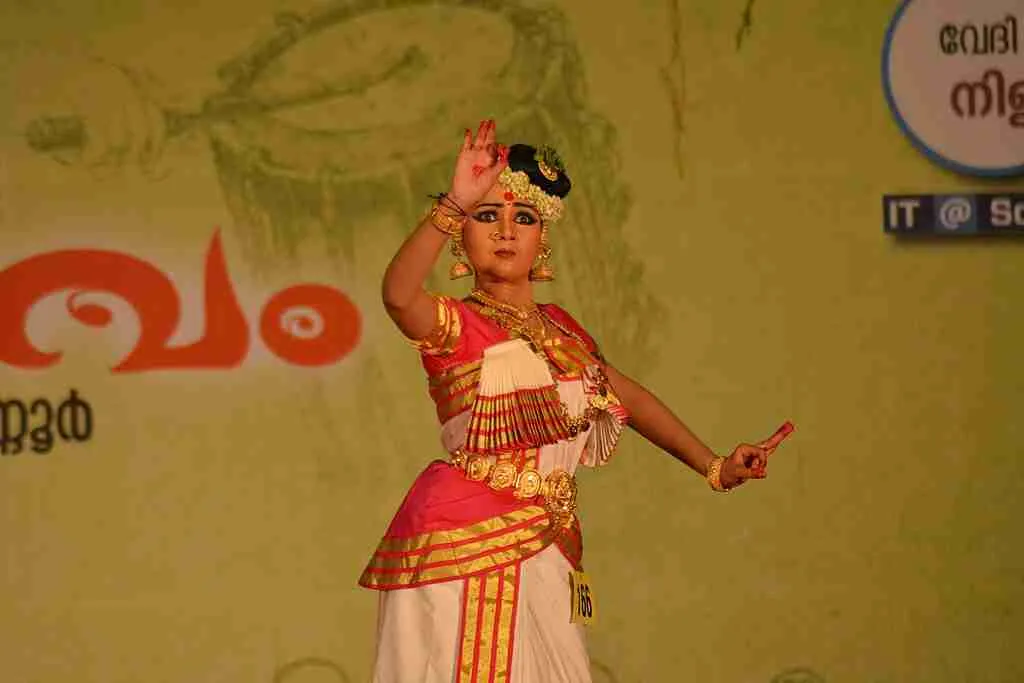
Kerala Natanam is a relatively modern dance form that has been practised for about 80 years, rooted deeply in the classical traditions of Kerala’s Kathakali yet evolving to meet the tastes and understanding of a broader audience. This dance form was conceived in the early 1930s by the legendary Guru Gopinath, a Kathakali exponent with mastery in both the northern and southern styles of this classical art. Recognizing that Kathakali was largely appreciated only by the learned Namboodiris and those familiar with its intricate techniques, Guru Gopinath sought to create a dance form that would be accessible and enjoyable to the general public.
The Birth of Kerala Natanam
Guru Gopinath envisioned Kerala Natanam as a novel art form that evolved from Kathakali, encompassing elements like nrutha (pure dance), nritya (dance with music and gestures), and natya (dramaturgy). His definition of Kerala Natanam highlights the integration of aamgika (body gestures), vaachika (verbal expression), aahaarya (costumes and makeup), and saatvika (emotions and involuntary responses) in accordance with the taala mela (rhythmic cycles) of traditional percussion instruments used in Kerala.
Key Differences from Kathakali
Costumes and Makeup: In Kathakali, the basic costumes and makeup are uniform across different roles, and the focus of expression is predominantly on facial movements. The songs are classical Padams (lyrical compositions). In contrast, Kerala Natanam features costumes and makeup tailored to each character, enhancing the expressiveness of the performance. The songs are in common Malayalam, making them more relatable to the audience. This approach allows the dance form to be more expressive, with an emphasis on body gestures along with facial expressions.
Posture and Poses: Another significant difference lies in the posture. While Kathakali performers often use a wide stance with feet at shoulder distance, Kerala Natanam artists adopt the Tribhanga pose, where the body is bent into three parts resembling an ‘S’. This pose is considered more graceful and convenient for dancing, adding to the visual appeal of the performance.
Influence of Raja Ravi Varma: The costumes used in Kerala Natanam were influenced by the paintings of Raja Ravi Varma, making the characters easily identifiable by the common people. The simplified makeup also made it easier for performers to prepare, reducing application time and complexity.
The Evolution of Performance

Kerala Natanam performances can take various forms, including Ekanga Natanam (solo dance), Sangha Natanam (group dance), and Nataka Natanam (dance drama). The use of traditional instruments like Maddalam, Chenda, Idakka, and northern Indian instruments such as Tabla, Harmonium, and Sarangi creates a unique auditory experience that complements the visual spectacle.
Unlike Kathakali, where training was predominantly reserved for men, Kerala Natanam opened up opportunities for both men and women. This inclusivity led to the development of pair dancing, a distinct style within Kerala Natanam.
The repertoire of Kerala Natanam includes a wide range of themes, from epic stories like the Mahabharata to contemporary topics. The use of Carnatic Keerthanas, Malayalam poetry, and classical songs by famous composers like Irayimman Thampi and Swathi Thirunal adds depth and diversity to the performances.
Training and Institutions
Training in Kerala Natanam is less intensive compared to Kathakali. It does not require Uzhichils (body massages), which are an integral part of Kathakali training. The first institution to teach Kerala Natanam was the Sree Chithrodaya Narthakaalayam in Trivandrum. The Maharaja of Travancore, Chithira Thirunal Balarama Varma, recognized the potential of this new art form and supported Guru Gopinath by appointing him as the Palace dancer and providing facilities and grants for the institution.
Famous Performances in Kerala Natanam
Some of the most notable dance pieces in Kerala Natanam include:
- Mayoora Nrutham (Peacock Dance)
- Veda Nrutham (Hunter Dance)
- Maanava Jeevitham (Life of Man)
- Narasimhaavathaaram (Narasimha Incarnation)
- Raasa Kreeda (Divine Dance of Krishna with the Gopis)
- Kanaka Chilanka (Golden Anklets)
- Buddha Charitham (Story of Buddha)
- Navakeralam (New Kerala)
- Chandaala Bhikshuki (Untouchable Beggar Woman)
- Yesu Vijayam (Victory of Jesus)
- Sister Niveditha
- Divya Naadam (Divine Tune)
- Gandhi Sooktam (Story of Gandhi)
Challenges and the Way Forward
While Kerala Natanam has made significant strides in becoming a popular dance form, it faces challenges such as the lack of authoritative literature and recognition on a global scale. Guru Gopinath’s explanations of Kerala Natanam in his book of dance serve as a crucial guideline, but there is a need for more comprehensive documentation and scholarly research to preserve and promote this art form.
Conclusion
Kerala Natanam is a testament to the ability of traditional art forms to evolve and adapt to changing cultural contexts. It bridges the gap between the classical and the contemporary, making it accessible to a broader audience while retaining its roots in Kerala’s rich artistic heritage. As more practitioners and scholars take an interest in this dance form, it holds the potential to achieve greater recognition and preservation for future generations.