 The story of Mudiyettu centers around the legendary encounter between the goddess Kali and the demon Darika. Darika, having appeased the gods, received a boon that he could only be killed by a woman not born of human origin. This divine protection made him arrogant, and he began threatening gods and humans alike. In response, Lord Shiva, the destroyer of evil, manifested Kali from his third eye and commanded her to defeat Darika.
Kali ventured into the forest, gathering the support of bloodthirsty spirits and souls. With the fierce energy of these spirits, she waged war against Darika, ultimately defeating and killing him. This victory is symbolically represented in Mudiyettu, a ritual performance performed to invoke the power of Kali and honor her triumph.
 Mudiyettu is traditionally held after the harvest, marking the end of the agricultural cycle and the beginning of new endeavors. The ritual is celebrated by the entire village and can last anywhere from a week to as long as 41 days. It is a community affair, with each caste having its unique role and responsibility in ensuring the successful performance of the ritual.
- Parayan: Responsible for the leather needed to craft the drums and bamboo artifacts used during the performance.
- Tandan: Takes charge of collecting the areca nut fronds for the creation of the masks and headgear.
- Ganakan: This group paints the masks and sings songs that accompany the performance.
- Maran Community: Prepares and maintains the torches that play a significant role in the ritual.
- Kuruvan: Ensures the torches remain lit during the ceremony.
- Veluthedan/Patiyan: Responsible for laundering the deity’s sacred dress.
- Brahmins: Initiate the rituals, beginning with prayers and mantras to honor the deity.
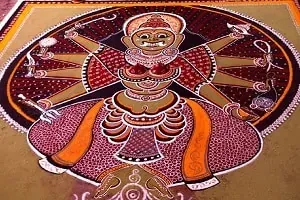
- Kurups/Marars: Draw the image of Kali on the ground to begin the ritual.
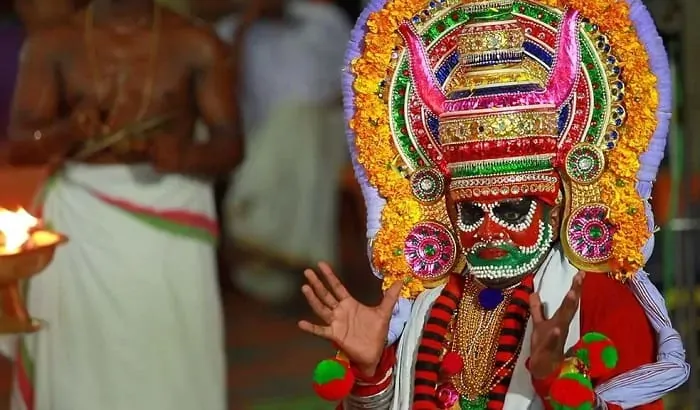
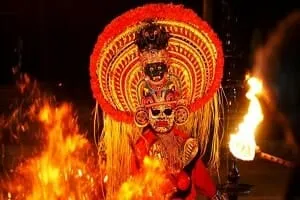
The artists performing Mudiyettu wear heavy makeup, intricate costumes, and large headgear, often featuring a mask of Kali. The vibrancy of their costumes, typically a red vest with a white belt, creates an ethereal ambiance. The performance is accompanied by traditional instruments like the Veekku chenda, Urutu chenda, Elathalam, and Chengila.
 Mudiyettu follows a series of intricate steps that build the ritual’s tension and sanctity. These stages include:
- Kotti Ariyippu: The official announcement of Mudiyettu to the village, signaling the start of the ritual.
- Kalam Ezhuthu: The artist draws a portrait of Kali using natural colored powders on the ground. This sacred image is considered to invoke Kali’s presence, and it is traditionally erased using areca nut fronds just before the performance begins.
- Kalam Paatu: Songs praising Kali are sung, invoking her blessings and ensuring that her power will manifest during the performance.
- Chutti Kuthal: The performers adorn themselves with elaborate makeup, transforming into divine figures, particularly Kali herself.
- Vilakku Vaipu: The lighting of lamps on the stage, which signifies the setting of the sacred space for the performance to begin.
- Keli Kott: This is the formal announcement of the performance’s commencement, marking the transition into the ritual battle between Kali and Darika.
 Mudiyettu is not just a performance; it is a sacred practice that brings blessings to the community. Some unique customs that accompany the performance include:
- Blessing of Babies: Young children in the audience are taken by Kali to the lamp on stage and blessed. This act is believed to immunize them from diseases like smallpox and protect them from harmful influences.
- Pantham Uzhiyal: Kali, after defeating Darika, performs a pooja (worship) using a torch, which is then passed around among the devotees. As the torch is moved through the audience, participants throw Thelli (dried and powdered resin of Pine wood) onto the flame, symbolizing the purification and blessings of the goddess.
- Mudi Uzhiyal: At the end of the ritual, the sponsor of Mudiyettu and their loved ones receive blessings directly from Kali. Kali removes her headgear and offers them sacred prasadam (blessed offerings).
- Shivasthuthi: The performance concludes with the singing of Shivasthuthi, a prayer to Lord Shiva, acknowledging his power and grace.