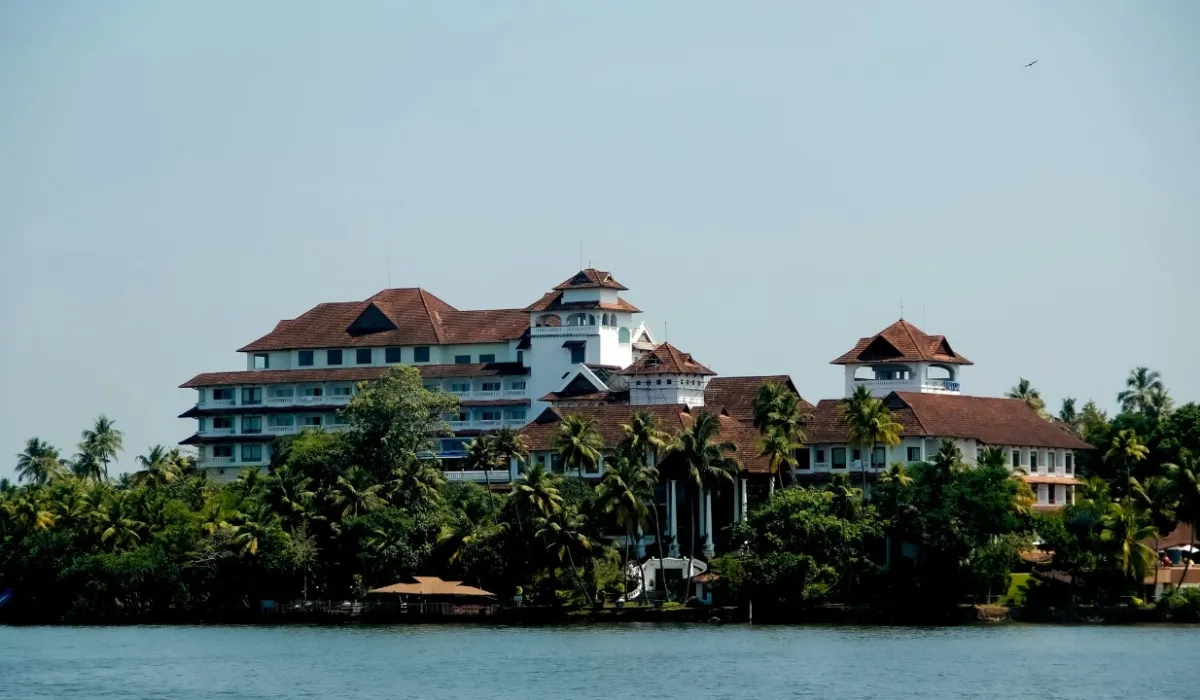
Ashtamudi Lake in Kollam is one of Kerala’s most peaceful backwater destinations. It’s the second-largest lake in the state after the famous Vembanad, but it feels like a world apart. The name comes from Malayalam – “Ashta” meaning eight and “Mudi” meaning peaks – which describes the lake’s distinctive shape, with multiple branches spreading out like the arms of an octopus across the landscape.
Spend even a few hours here, and the pace of life makes an impression. Nothing rushes. Country boats drift slowly. Fishermen mend their nets without looking at watches. The loudest sounds are often just water lapping against wooden hulls and temple bells drifting across from distant villages.
This guide offers honest, practical information for travellers who want to experience Kerala backwaters without the crowds. All details are drawn from verified sources and local knowledge.
What Makes Ashtamudi Lake Different
Alleppey has beautiful houseboats and postcard sunsets, but it also has crowds and a busy commercial energy. Ashtamudi is quieter and less commercial. It’s a Ramsar Wetland Site – an internationally protected ecosystem, designated in August 2002 in recognition of its global ecological importance.
The lake is fed by the Kallada River and opens toward the Arabian Sea near Neendakara through a wide estuarine area. With a surface area of 61.4 square kilometres and a maximum depth of 6.4 metres at its deepest point, Ashtamudi is the deepest estuary in Kerala.
What makes Ashtamudi special isn’t just the scenery. It’s the people. Fishing and coir‑making have sustained families here for generations. Visitors will see women twisting coconut fibre into rope, fishermen hauling Chinese dip nets at sunrise, and children jumping off small jetties. None of this is a performance for tourists – it’s simply how life works here.
The lake also supports rich biodiversity. According to official records, its waters and surrounding wetlands are home to 57 species of birds, 97 species of fish, and 43 species of mangroves and marshy plants.
A Note on History
Kollam, formerly known as Quilon, was an important port in the Indian Ocean spice trade. Greek and Roman ships arrived here as early as the 1st century AD. By the 9th century, Arab and Chinese merchants frequented its shores. The famous Chinese fishing nets (cheena vala) seen along the lake are believed to have arrived through these historical trade connections, not as a modern tourist prop.
Reminders of that past still stand – crumbling Dutch and Portuguese buildings in nearby Thangassery, the old lighthouse, and the working harbour at Neendakara. This history adds a quiet depth to a boat ride across the lake.

Houseboats on Ashtamudi – A Calmer Experience
Yes, you can take a houseboat here. But unlike Alleppey, where dozens of boats can crowd the main channels, Ashtamudi offers a noticeably calmer experience.
Ashtamudi houseboats are mostly traditional kettuvallams – rice barges converted into comfortable floating homes. Because far fewer boats operate here, you won’t see “houseboat traffic jams.”
What to expect:
- Day cruises last between two and four hours. The route takes you past coconut groves, fishing villages, and mangrove islands.
- Overnight stays allow you to wake up on the water. Most boats have bedrooms, attached bathrooms, and a cook who prepares local Kerala meals.
- Sunset from an Ashtamudi houseboat is memorable – the sky turns warm orange and pink, and the lake becomes very quiet.
Local tip: Book a cruise that departs around 4 PM from Kavanad or Asramam. You’ll catch the golden hour light and return after dark, when village lights twinkle along the shore.
Munroe Island – Away from the Main Routes
If you have only one day, consider skipping the long houseboat cruise and heading to Munroe Island instead (locally called Munrothuruthu).
Munroe Island is a cluster of eight small islands where the Kallada River meets Ashtamudi Lake. Named after a British officer from the former Travancore kingdom, the place has kept its original character. No big hotels, no souvenir shops – just narrow canals, coconut farms, and friendly people.
What to do there:
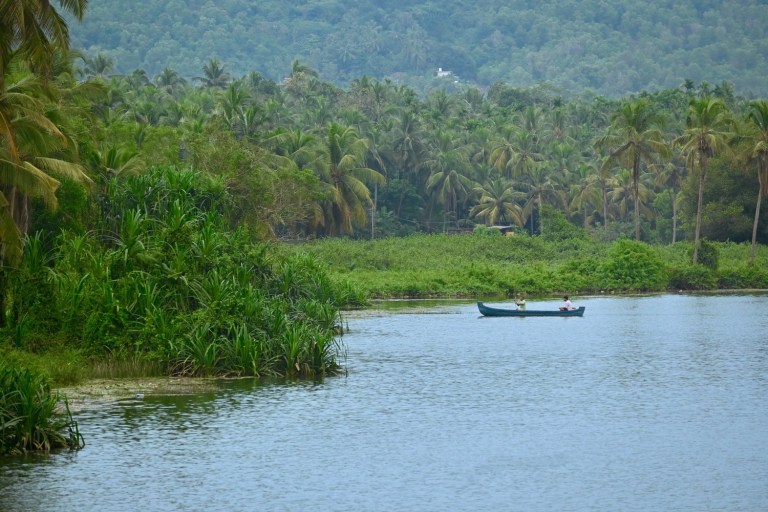
- Canoe through the canals. These waterways are too narrow for houseboats, so you’ll have them almost to yourself. Your boatman will point out kingfishers, water lilies, and homes tucked into the greenery.
- Walk through the village. You’ll see coir being made, toddy tapped from coconut trees, and children walking to school. It’s safe and welcoming.
- Watch the paddy fields. Visit between September and October – the harvest season turns the landscape gold.
How long to spend: Half a day is enough. Combine a morning canoe ride with a village walk and lunch at a local homestay.
Wildlife and Birdwatching
Because Ashtamudi is a protected wetland, its wildlife is surprisingly accessible to visitors.
Birds: Between November and February, migratory birds arrive. Look for egrets, herons, cormorants, and sometimes brahminy kites. The mangroves near the Kallada river mouth are especially good for birdwatching.
Marine life: The lake supports over fifty species of fish, along with crabs, prawns, and clams. Ashtamudi’s clam fishery is certified by the Marine Stewardship Council – a rare honour. Local fishers voluntarily close the fishery for three months each year to let stocks recover.
Mangroves: These tangled trees along the shoreline act as natural nurseries for baby fish and crabs, and they also prevent erosion. A canoe ride through a mangrove channel feels like entering a green tunnel.
Life Along the Water – Fishing and Coir
You can’t visit Ashtamudi without noticing how deeply people depend on the lake.
Fishing is still a major livelihood. Early mornings, small wooden boats set out. Some fishermen use cheena vala – Chinese dip nets that lower into the water like giant claws. Others use cast nets or stake nets. Most are happy to let you watch if you keep a respectful distance.
Coir making is everywhere. Coconut husks are soaked in the backwaters for months – a process called retting. Then women beat the softened husks to separate the fibre. It’s hard, repetitive work, but it produces the strong brown rope used for mattresses, mats, and erosion control. You’ll see piles of coir drying along the banks.
Small ferries still connect villages. These aren’t tourist boats – they’re how people get to market, school, and the hospital. Riding one gives a genuine glimpse of daily life.
Other Places to See Near Ashtamudi
If you have extra time, these spots are worth adding to your itinerary.
Thangassery Lighthouse – About six kilometres from the lake, a red‑and‑white striped lighthouse. Climb to the top for a view of the Arabian Sea. The surrounding area has old Dutch and Portuguese buildings – a bit weathered but full of history.
Kollam Beach – A simple, clean beach perfect for evening walks. Nothing fancy, but the sunset is lovely, and there’s a pleasant promenade.
Neendakara Harbour – One of Kerala’s biggest fishing harbours. Visit in the morning when trawlers unload their catch. It’s busy, smelly, and fascinating.
Thenmala – About 65 kilometres away, India’s first planned eco‑tourism destination. Nature trails, rope bridges, and a butterfly garden. Good for a day trip if you want forests after the backwaters.
Responsible Travel – Small Things That Matter

Ashtamudi is a living ecosystem, not a theme park. A few simple choices make a real difference.
- Carry a reusable water bottle instead of buying plastic ones.
- Don’t feed the birds or fish – it changes their natural behaviour.
- Stay on marked boat routes to protect fragile banks.
- Buy coir products or handicrafts directly from village sellers. Your money stays local.
- If you see litter, pick it up. It genuinely helps.
The clam fishers here voluntarily close their season for three months every year to let the population recover. Visitors can match that respect by travelling lightly.
Best Time to Visit
October to March is the peak season. The weather is pleasant – warm days, cooler evenings, low humidity. Perfect for boat rides. Book houseboats in advance if you’re travelling between December and January.
Monsoon (June to September) is dramatic. The lake fills up, the landscape turns brilliant green, and the crowds disappear. It rains heavily, but usually in bursts. Some houseboats don’t operate during very heavy rain – call ahead. Also, bring insect repellent.
April and May are hot and humid. Early mornings and late evenings are still fine for boat rides. Prices are lowest during these months.
Final Thoughts
Ashtamudi Lake doesn’t offer a checklist of Instagram spots. It won’t give you luxury spas or nightlife. What it offers is space – to breathe, to watch, to slow down.
From the quiet canals of Munroe Island to the sunset views at Asramam, this is a side of Kerala that feels unhurried and unpolished. It rewards patience. It feels closer to the slower rhythms that once defined the region’s backwaters.
Pack light. Wake up early. Take a canoe. And just listen.