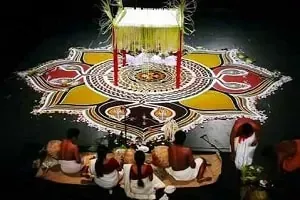
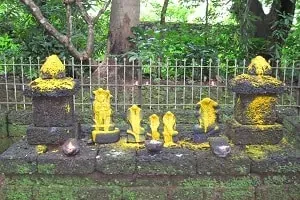
 The Pulluva community’s traditions are profoundly ritualistic, centering around spiritual practices and songs of devotion. The Nagampatikal sing praises to the snake gods, performing rites that include offerings like Noorum Paalum (a mixture of milk and lime) and Kalams, colorful rangolis drawn with rice flour, turmeric, and powdered colors. These rituals are believed to protect the land from harm and ensure prosperity, with snake worship playing a key role in local agricultural fertility.
The Pulluvan Pattu is often performed during auspicious occasions, particularly on the Aayilyam day, a day sacred to snakes. The songs are typically sung by a Pulluvan (male) and a Pulluvatti (female), in a setting that can range from village homes to snake temples, fostering a sense of community and continuity in preserving this ancient art.
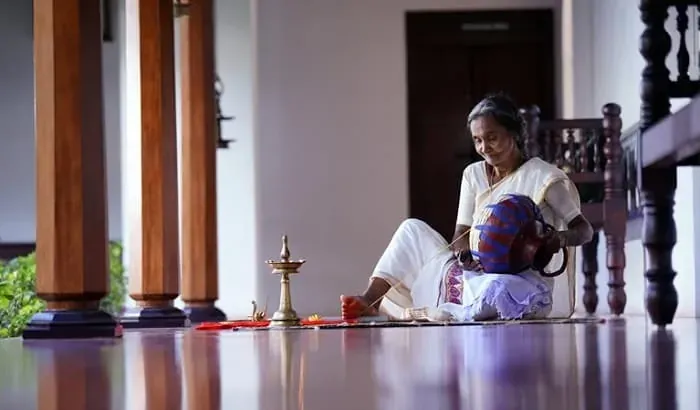 Pulluvan Pattu would be incomplete without its unique set of musical instruments, which add depth to its ritualistic beauty. Each instrument has its own distinct role, contributing to the hypnotic and ethereal quality of the performance.
- Pulluvan Veena:
- This traditional instrument, resembling a one-stringed violin, is made from a hollow bamboo stick with a wooden shell. The brass or vegetal wire serves as the string. The Pulluvan Veena is played with a bamboo stick, creating a distinct sound that reflects the spiritual atmosphere of the ritual.
- Expert Insight: According to ethnomusicologist Dr. R. Krishna, the Pulluvan Veena’s simplicity and single-string design mirror the oneness of the universe in spiritual terms, making it an ideal instrument for meditative music.
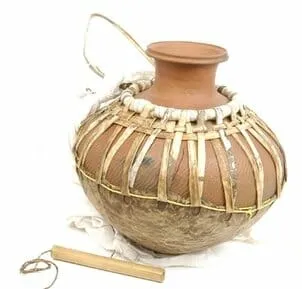
- Pulluvan Kutam:
- The Pulluvan Kutam is an earthenware pot that is fitted with a string passing through holes on either side, with the skin of a calf stretched over one side. When plucked, it produces a melodic resonance that complements the vocal aspects of the song.
- How it Works: The sound from the Pulluvan Kutam is unlike any other percussion instrument, with its earthy tones reflecting the deep connection between the people and the land.
- Thaalam (Bell Metal Cymbals):
- These brass or copper cymbals, sometimes referred to as Manjeera or Tala, are essential in creating rhythmic patterns that guide the tempo of the song. The cymbals are struck together to produce a high-pitched sound, often acting as a focal point in the music.
These instruments combine to form the sonic backdrop of Pulluvan Pattu, each piece contributing to the mood of reverence and devotion that defines this unique musical tradition.
 While Pulluvan Pattu has deep roots in Kerala’s rural heartlands, its legacy continues in various temples dedicated to serpent worship, such as the Maniyassery Gandharva Swamy Temple (Kottayam District), Mannarassala Temple (Alappuzha District), and Vetticode Nagaraja Temple (Alappuzha District). In these places, the tradition is still practiced, albeit with evolving practices to adapt to modern times.
Interestingly, the rise of cultural festivals in Kerala, such as Vishu and Onam, has provided a platform for younger generations to engage with this heritage. However, the core ritual of snake worship remains central to Pulluvan Pattu’s performance, preserving both its cultural and spiritual essence.
 Like many traditional art forms, Pulluvan Pattu faces challenges in maintaining its relevance in a rapidly changing world. With the younger generation moving away from rural areas, the connection to these ancient practices is waning. However, efforts are being made by cultural organizations, including the Kerala Folklore Academy, to preserve and promote the tradition.
There are also instances of modern adaptations, with some artists blending Pulluvan Pattu with contemporary music styles, keeping the essence alive while appealing to a broader audience. Still, the heart of Pulluvan Pattu will always remain tied to the land and the rituals of snake worship.